




A free certification is worth having when it closes one specific skill gap or shows initiative early in your career. A paid certification earns its fee when it comes with a formal assessment, a recognised body behind it and relevance to the job you want. The price tag alone settles neither question, so this guide shows you what to check: the assessment, the issuer, the verification method and the fit with your occupation.
Table of Contents
- The real differences between free and paid certifications
- Are free certifications worth it?
- Do paid certifications pay off?
- What does accredited certification mean?
- Digital badge vs certificate
- How to judge any certification before you commit
- Our perspective
- Start free, then step up when it makes sense
- FAQ
- Sources
The real differences between free and paid certifications
Price is the visible difference. The ones that matter sit underneath it.
| What to check | Typically free | Typically paid |
|---|---|---|
| Purpose | Introduction to a subject, a first signal of interest | Validation of a defined body of knowledge |
| Assessment | Short quiz or none | Formal exam, sometimes with experience requirements |
| Issuer | Course platform, vendor or training provider | Professional body, standards organisation or certification provider |
| Verification | Often a certificate of completion or a link | A credential you can verify with the issuer |
| Next step | Often a route to a paid level | Often stackable, with more advanced credentials above it |
These are tendencies, not rules. Some free credentials are rigorous and some paid ones are little more than receipts, so judge each certification on its own terms. Rules on prerequisites, exam format, proctoring, validity and renewal are set by each provider. Never assume that what applies to one applies to another.
Research from the Brookings Institution points the same way. It finds that job-relevant certifications with proctored exams and third-party validation show strong returns, while badges and certificates tend to signal rather than reward accumulation. That does not mean an unproctored exam is less credible by nature. It means the independent, job-relevant element is what counts, and you should look for it whatever the price.
Are free certifications worth it?
Yes, in the right situation. Free certifications can help close a specific skill gap and signal initiative, especially for early-career workers and career changers, though they supplement experience rather than replace it.
They work best in three cases:
- You are testing a field. A free introductory credential costs nothing but time, and shows whether you enjoy the subject before you commit money.
- You need vocabulary fast. A career switcher who can speak accurately about sprints, backlogs or process variation walks into an interview better prepared.
- You want a first line on your CV. A relevant free credential beats an empty skills section.
They work less well when you expect them alone to change your prospects. Brookings reports that for workers without a bachelor’s degree, a first job-relevant non-degree credential is associated with a 6.8% wage premium, and that wage returns depend almost entirely on whether the credential is relevant to the worker’s occupation. Relevance beats price. A relevant free credential can be worth more than an unrelated paid one.
A certification also does not prove real-world performance, and no credential guarantees a job, a salary or a promotion. The same Brookings analysis finds that for experienced workers the extra wage return on additional credentials is often near zero, which suggests certifications help most at the start of a career or at a pivot.
Free options in the GetVoucher catalogue
We publish two free entry points: Scrum Fundamentals Certified and Six Sigma Yellow Belt (SSYB™), both listed at £0. They are the first rung of the SCRUMstudy and 6sigmastudy pathways. The SCRUMstudy Scrum Fundamentals Certified exam is an online, unproctored exam of 40 questions in 60 minutes. What each free product includes can differ, so read the product page before you start.
Do paid certifications pay off?
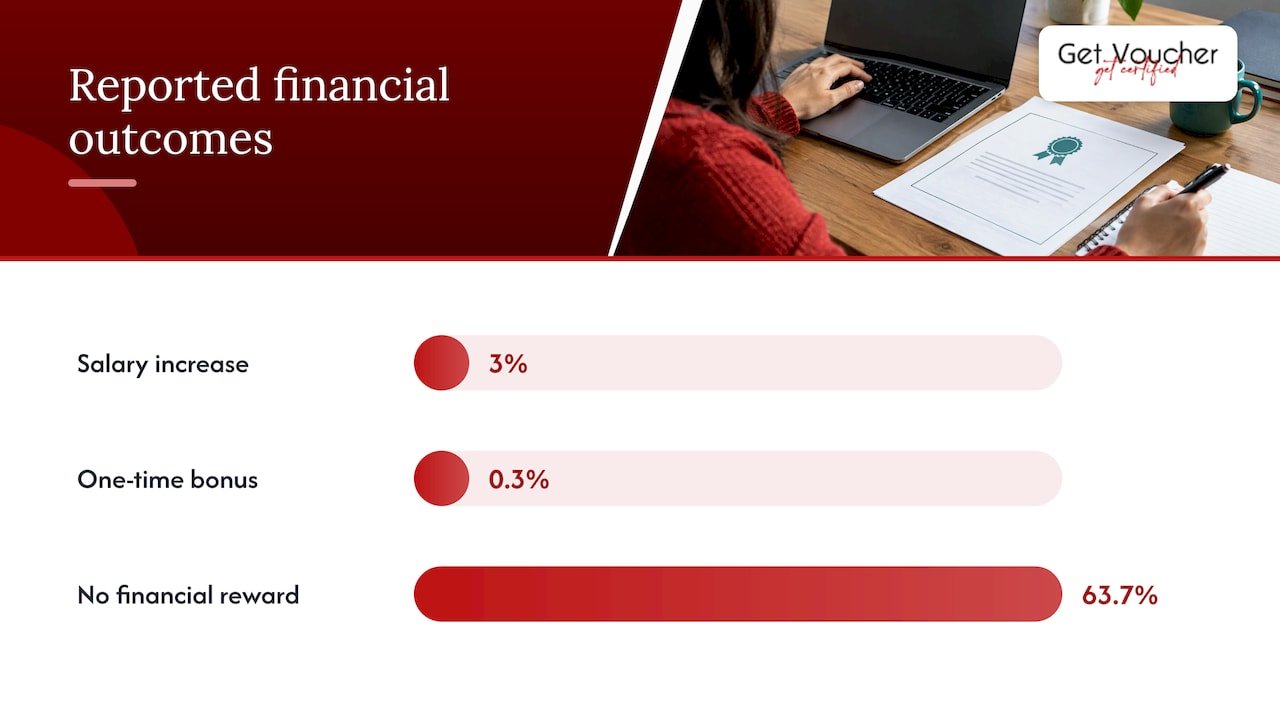
Sometimes, and the evidence is more modest than the marketing. A 2024 study of school business officials found that 3% reported a salary increase for their certification, 0.3% a one-time bonus and 63.7% no financial reward. It covers one US profession, so treat it as a caution against assuming a financial return. The reasons to pay are often practical: a structured syllabus, a defined assessment, a credential an employer can check, and a path to higher levels.
Some industry certifications are also stackable, letting you earn further credentials as your knowledge and experience grow. A free foundation followed by a paid practitioner credential is a common shape for this.
What a paid certification actually costs
The sticker price is rarely the whole bill. Before comparing, separate these items, because providers bundle them differently:
- Exam fee or voucher. The cost of sitting the assessment.
- Mandatory training. Some credentials require an approved course before you can sit the exam. Others do not.
- Optional preparation. Study guides, practice tests and video courses you choose to add.
- Retakes. Some providers charge for a second attempt, others do not.
- Renewal. Some credentials expire and need fees or continuing education, others are valid for life.
An exam-only voucher is not automatically the cheapest route either. If your chosen provider demands a training course, the real price includes it. Our guide to Scrum Master certification cost shows how that breaks down provider by provider.
For reference, these are our current catalogue prices for SCRUMstudy credentials: Scrum Master Certified (SMC®) is £249 and Scrum Product Owner Certified (SPOC®) is £299. The SMC® exam is an online, unproctored exam of 100 questions in 120 minutes.
What does accredited certification mean?
“Accredited” is one of the most abused words in this market, so be precise about who accredited what.
In certification, accreditation usually means an independent body has assessed the certifying organisation, not you and not a particular course. For certifying people, the international benchmark is ISO/IEC 17024. The UK Accreditation Service describes it as accreditation aimed at a globally accepted benchmark for organisations operating certification of persons. A certification body accredited against it has had its processes, such as exam development and impartiality, independently checked.
That gives three things to keep apart:
- Accredited certification body. An independent accreditor has audited the organisation that awards the credential.
- Regulated qualification. A formal qualification in the UK’s national frameworks, which is a different thing from a professional certification. Check the relevant regulator’s register rather than a provider’s own wording.
- “Accredited course”. Often a provider’s or trade body’s own label. It may be meaningful or it may not.
Accredited vs non-accredited: does it matter?
It depends on your occupation and your employer. Some regulated professions and public-sector tenders do ask for accredited credentials. Many widely used industry certifications in fields such as Agile, marketing and process improvement are awarded by specialist providers with their own bodies of knowledge, and accreditation is not a requirement for them. Never assume that a non-accredited certification is worthless or that an accredited one is automatically superior. Six Sigma is a good example: ISO 18404 or RSS accreditation is not universally required, and ASQ, IASSC/PeopleCert, CSSC and 6sigmastudy each run their own prerequisites, exams and renewal rules.
The practical test is simple. Ask who issues the credential, who checks the issuer, and whether the employers or job adverts in your target role mention it.
Digital badge vs certificate
The two are often confused, and many credentials come with both.
A certificate is a document, usually a PDF or printed page, stating that a person completed a course or passed an exam. A digital badge is a web-based credential that carries data behind the image. NABCEP, the solar professionals’ board, says its badges are portable, verified and secure, with metadata detailing the requirements and evidence of achievement.
| Certificate | Digital badge | |
|---|---|---|
| Format | PDF or paper | Image with embedded, linkable data |
| Verification | Contact the issuer or check a register | Click through to the issuer’s record |
| Where it lives | A folder, a CV | LinkedIn, email signature, a portfolio |
| Value | Depends on the issuer and assessment | Depends on the issuer and assessment |
The last row matters most. A badge is a better container, not a better credential. A badge from a vague course proves little, while a PDF from a reputable body with a verifiable record proves more. Check how the issuer lets third parties confirm the credential. BCEN, for example, offers credential verification requests that reduce the potential for fraud and misuse. Our article on how professionals verify unproctored certifications explains what to ask for.
A certificate of completion shows you finished a course. A certification shows you passed an assessment against a defined standard. Both have a place, but they are not interchangeable on a CV, so label them accurately.
How to judge any certification before you commit
Work through these five checks, free or paid.
- Relevance. Does the credential appear in job adverts for the role you want? Wage returns track occupational relevance more than anything else.
- Issuer. Who awards it, and are they a recognised body in your field?
- Assessment. Is there a real exam, with a stated number of questions, time limit and pass mark? Remember that a pass rate and a passing score are different things.
- Verification. Can an employer confirm it in seconds?
- Total cost and validity. Add exam, training, retakes and renewal, and check whether it expires.
For career changers, the credential is only one part of the picture. Interview preparation matters as well, and this guide on getting an IT job without experience covers how early-career candidates present relevant skills.
Which route suits you?
- Career switcher on a tight budget: start with a free foundation credential in your target field, then decide whether a paid credential is worth it.
- Working professional validating existing experience: a paid, assessed credential from a recognised provider carries more weight than a stack of free badges.
- Student or graduate: one or two relevant, assessed credentials usually serve you better than many unrelated ones.
- Experienced practitioner: be selective. Extra credentials add less once you have a track record.
The following guides compare options by career stage: project management certifications, sales certifications and digital marketing certification costs.
Our perspective
We built GetVoucher around a simple observation: the choice is rarely free or paid. It is usually free then paid, in the right order.
A free credential such as Scrum Fundamentals Certified or Six Sigma Yellow Belt lets you learn the vocabulary and see whether the field suits you. If it does, a paid practitioner credential gives you a defined syllabus and an assessment, and the vouchers are priced so that you do not have to commit to classroom training. Our aim is to make that progression clear and affordable.
We are also open about how we work. GetVoucher has a commercial relationship with certification providers including VMEdu, and we sell SCRUMstudy, SMstudy, 6sigmastudy and NGstudy products. We do not sell Scrum Alliance, Scrum.org, ASQ or IASSC/PeopleCert credentials, and we do not claim that one provider’s rules apply to another’s. Prerequisites, exam formats, validity and renewal are set by each provider, and you should read them on the product page before you buy.
What we would tell a friend: pick the credential that matches the job you want, check how it is assessed and verified, and treat it as one part of your case alongside real work.
Rayan
Start free, then step up when it makes sense
If you are weighing a first step, our certifications catalogue lists every pathway by subject, from free introductory credentials through to advanced levels such as Six Sigma Black Belt. Paid vouchers include, for example, Six Sigma Green Belt (SSGB™) at £149 and SMstudy® Certified Digital Marketing Professional at £199. Inclusions vary by product, so check the individual page for what comes with each.
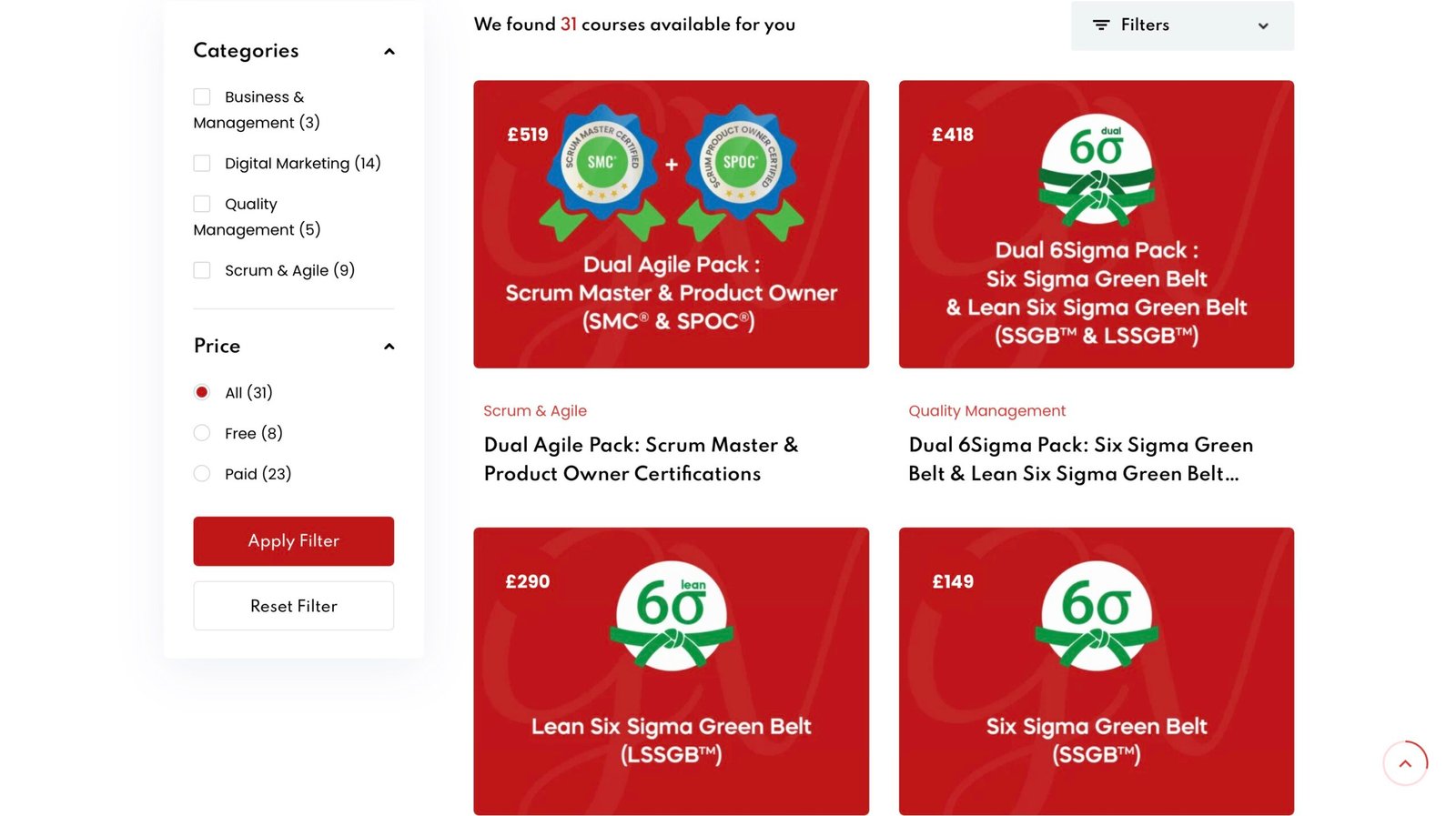
You can browse the full voucher range and compare it with your target role before you buy.
FAQ
Are free certifications recognised by employers?
Some are, but recognition depends on the issuer and on your occupation. A free credential can show initiative and a specific skill, especially early in your career. It supplements experience rather than replacing it, so pair it with real projects.
Is a paid certification always better than a free one?
No. A paid credential often brings a formal exam, a defined syllabus and verification, which are the features that matter. A free credential from a respected issuer can be more useful than a paid one that is irrelevant to your field.
What is the difference between accredited and non-accredited certification?
Accreditation normally means an independent body has checked the organisation that awards the credential, for example against ISO/IEC 17024. A non-accredited certification may still be widely used in its field. Check who issues it and whether your target employers ask for it.
Is a digital badge the same as a certificate?
No. A certificate is a document, while a digital badge is a web-based credential with verifiable data behind it. Both are only as credible as the issuer and the assessment behind them.
Sources
- The credential boom is here, but which ones actually help workers (Brookings)
- 90+ Free Certifications You Can Add to Your Resume (Jobscan)
- CBO Value of Certification Study 2024 (CASBO)
- Choosing professional credentials guide (University of Arizona)
- Certification Body Accreditation (UKAS)
- Digital Badges (NABCEP)
- Certification Verification (BCEN)