




If you’re starting out, aim for an entry credential such as ECBA or the BCS Foundation Certificate. If you already have documented business analysis hours behind you, CCBA or CBAP will carry far more weight. GetVoucher doesn’t currently sell business analyst exam vouchers, but its course access and preparation support cover the ground while BA vouchers are added to the platform in the coming months.
TL;DR:
- Certification requirements depend on experience: ECBA and BCS Foundation suit beginners, while CCBA and CBAP require documented work hours and professional references.
- Most exams are remote proctored, so candidates need a quiet space, stable internet, and photo ID to complete testing successfully.
- Sector-specific value varies: regulatory industries favor formal certifications like CBAP, while tech firms prefer demonstrated project experience and specialized Agile or product certifications.
- The certification process is staged over years: foundational credentials in first two years, practitioner-level in years 2-5, and strategic or leadership certificates afterward.
- GetVoucher offers study resources and preparation bundles but does not currently sell exam vouchers; upcoming certification options include BA-specific vouchers.
Table of Contents
- What is business analyst certification and which path fits your experience?
- Which certification suits which career stage?
- What skills do these certifications actually test?
- How do you choose the right business analyst certification?
- What does a business analyst certification roadmap look like over time?
- How does GetVoucher support business analyst certification preparation?
- How does certification affect different industries and sectors?
- What does business analyst certification actually cost?
- How do you maintain certification status and professional reputation?
- Who benefits most from certification right now?
- Get ready for business analyst certification with GetVoucher
- Sources
What is business analyst certification and which path fits your experience?
Business analyst certification proves, on paper, that you can turn a vague business problem into a workable solution. The two dominant frameworks come from IIBA and BCS, and they test different things in different ways.
IIBA runs a three-tier ladder built on documented work hours:
- ECBA (Entry Certificate in Business Analysis): no experience requirement, aimed at people moving into the field from adjacent roles or education.
- CCBA (Certification of Capability in Business Analysis): requires 3,750 hours of business analysis work completed within the last seven years, plus professional development hours and formal references.
- CBAP (Certified Business Analysis Professional): requires 7,500 hours within the last ten years, a heavier professional development load, and applications are subject to audit.
BCS takes a modular route instead. Its International Diploma in Business Analysis is built from four separate modules plus an oral examination, so candidates can bank one module at a time rather than sit a single high-stakes exam. That oral exam is recorded and assesses applied judgement, not just recall, which makes it a genuinely different test from a multiple-choice paper.
Most exams today run through remote proctoring, meaning you sit them from home under camera supervision. That has practical implications for preparation: you need a quiet room, a stable connection, and photo ID ready, alongside the actual syllabus revision.
Which certification suits which career stage?
Matching the credential to where you actually are, rather than where you’d like to be, saves months of wasted study time.
- Career switchers and entry candidates: start with ECBA or the BCS Foundation Certificate. Neither demands prior BA hours, so the real work is building a portfolio, ideally from a real project at your current employer, even a small process improvement task.
- Practising BAs with two to five years in role: CCBA or BCS practitioner-level modules formalise capability you’re already using daily. This is the tier that turns “I do this” into “I can prove this.”
- Senior analysts and consultants: CBAP or the advanced BCS diploma modules signal strategic and leadership capability, not just task execution.
- Specialists in agile, data, or product work: a specialist credential often adds more value than another core BA certificate, because it fills a gap the core syllabus doesn’t cover in depth.
The deciding factors are simple: how many verifiable hours you can document, whether you can secure formal references, and what your target employers actually ask for in job postings.
What skills do these certifications actually test?
Certification syllabuses map closely to what employers list in job descriptions, which is exactly why they hold weight in hiring decisions.
- Requirements elicitation and stakeholder management: interviewing techniques, conflict resolution, and structured requirement gathering.
- Process modelling and the business case: BCS practitioner-level syllabuses cover stakeholder analysis, modelling business activities, and benefits realisation as core competencies.
- Agile and product skills: user story writing and backlog governance sit closer to IIBA’s Agile Analysis Certification and to product ownership training than to the core BABOK syllabus.
- Data analytics literacy: certifications like CBDA test practical comfort with data, not statistical modelling, so the bar is “can you read a dashboard and challenge its assumptions,” not “can you build one.”
Pro Tip: Case studies teach these skills faster than flashcards. Pull a real requirements document from your own workplace and re-model it using whatever technique your syllabus specifies. You’ll remember it because it’s yours.
How do you choose the right business analyst certification?
Comparing your CV against real job adverts, not marketing copy, is the fastest way to shortcut the decision.
Start by checking the exact eligibility requirements for your shortlisted credential: hours needed, professional development hours, whether references are required, and whether the application gets audited. Then decide between a modular route (BCS) if you prefer to study in stages around a job, or a single-exam route (IIBA core) if you’d rather get it done in one sitting.
One data point worth keeping in view: IIBA’s own certification material reports that CBAP holders typically earn higher average salaries than non-certified peers, though the gap will vary sharply by market, sector, and seniority.
Watch for red flags before committing money or time:
- Vague or unverifiable accreditation claims from training providers.
- Opaque recertification rules buried in fine print.
- Pass rate claims with no named, checkable source.
Your action checklist: audit your documented hours honestly, pick one primary credential rather than chasing three at once, schedule your professional development hours early, and book preparation time in your calendar before you book the exam.
What does a business analyst certification roadmap look like over time?
Certification works best as a staged plan, not a single event.
- Years 0 to 2: earn a foundation credential (ECBA or BCS Foundation), work on entry-level projects, and build basic data literacy and stakeholder-facing practice.
- Years 2 to 5: accumulate practitioner-level experience, work towards CCBA or BCS practitioner modules, and choose one specialism, agile, data, or product, rather than spreading thin.
- Year 5 onwards: target CBAP or advanced BCS diploma modules, focus on strategy and leadership capability, and prepare for oral-exam formats if you’re on the BCS diploma track.
Certifications validate the ability to turn business needs into measurable value, and stacking them alongside real project experience is what actually moves marketability, not the certificate alone. Broader labour-market resources, including the US Bureau of Labor Statistics’ outlook for management analysts, confirm steady demand for analytical roles generally, though salary specifics vary heavily by country and shouldn’t be read across markets.
How does GetVoucher support business analyst certification preparation?
GetVoucher does not currently sell business analyst exam vouchers, but you can find practical resources and study advice in Excel for Business: The Skills and Certifications That Matter to build your spreadsheet and data skills relevant to BA exam preparation. Certification availability is planned for the coming months, and interested learners can contact GetVoucher for current details and availability as that catalogue grows.
What the platform offers right now:
- Course access and study bundles that support preparation for BABOK and BCS-style syllabus areas.
- Partner relationships with VMEdu and its certification brands, giving learners a single place to explore related professional skills.
- A practical route into Agile and Product Ownership training, which complements core BA fundamentals rather than replacing them.
If you want to build complementary skills while BA vouchers are added, sign up for updates and browse the Agile and Product Ownership certification bundle already available on the platform.
How does certification affect different industries and sectors?
Certification carries different weight depending on where you’re applying it. In financial services and insurance, where regulatory documentation and audit trails matter, a formally certified BA with CBAP or CCBA behind their name often clears procurement and compliance hurdles faster than an uncertified peer with similar experience. Public sector and government-adjacent roles frequently list specific certifications in tender requirements, making the credential a practical gatekeeping tool rather than a nice-to-have.
Technology and software firms tend to weight certification differently. Agile-heavy engineering teams often value demonstrated product and backlog experience over a formal BA credential, which is why specialist certifications in agile analysis or product ownership can outperform a core BA certificate for that specific employer. Manufacturing and process-driven industries, meanwhile, lean towards process modelling and benefits realisation skills, the exact areas BCS practitioner syllabuses cover, because their business problems are operational rather than purely digital.
Healthcare and highly regulated sectors sit somewhere in between: stakeholder management skills matter enormously given the number of clinical, administrative, and technical parties involved in most projects, but formal certification is valued more as a signal of rigour than as a strict requirement. The practical takeaway is that no single credential dominates across sectors. Matching your certification choice to the industry you actually want to work in, rather than the one with the most job postings today, pays off over a longer career.
What does business analyst certification actually cost?
Costs break into three separate buckets, and conflating them is the most common budgeting mistake candidates make.
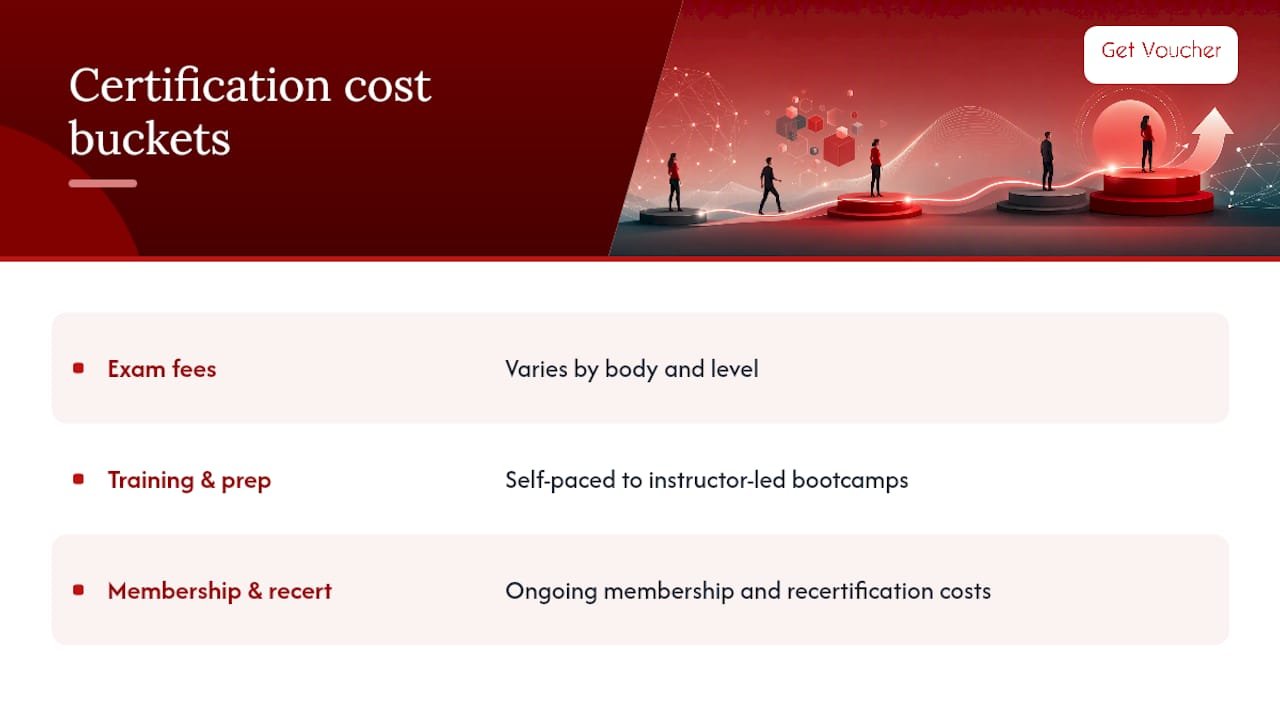
Exam fees vary by certifying body and level, with entry credentials typically costing less than senior-level exams that involve audit and reference verification. BCS’s modular diploma spreads cost across four separate module fees plus the oral exam, which can suit candidates who’d rather pay in instalments than in one lump sum.
Training and preparation costs sit on top of exam fees and vary widely depending on the route. Self-paced online courses cost far less than instructor-led bootcamps or private coaching, and platforms offering structured video training can meaningfully cut the hours otherwise spent hunting across scattered documents, forums, and third-party guides. Some professional certificate programmes, including Coursera’s Microsoft-backed business analyst pathway, market themselves specifically on speed and job-readiness rather than depth, which suits candidates prioritising a fast route into the field over comprehensive BABOK coverage.
Membership and recertification fees are the cost candidates most often forget to budget for. IIBA membership typically factors into the overall cost of pursuing and maintaining CCBA or CBAP, and professional development hours required for recertification carry their own time and sometimes course cost. Before committing, add up exam fee, training cost, and ongoing membership across the full certification lifecycle, not just the sticker price of the exam itself.
How do you maintain certification status and professional reputation?
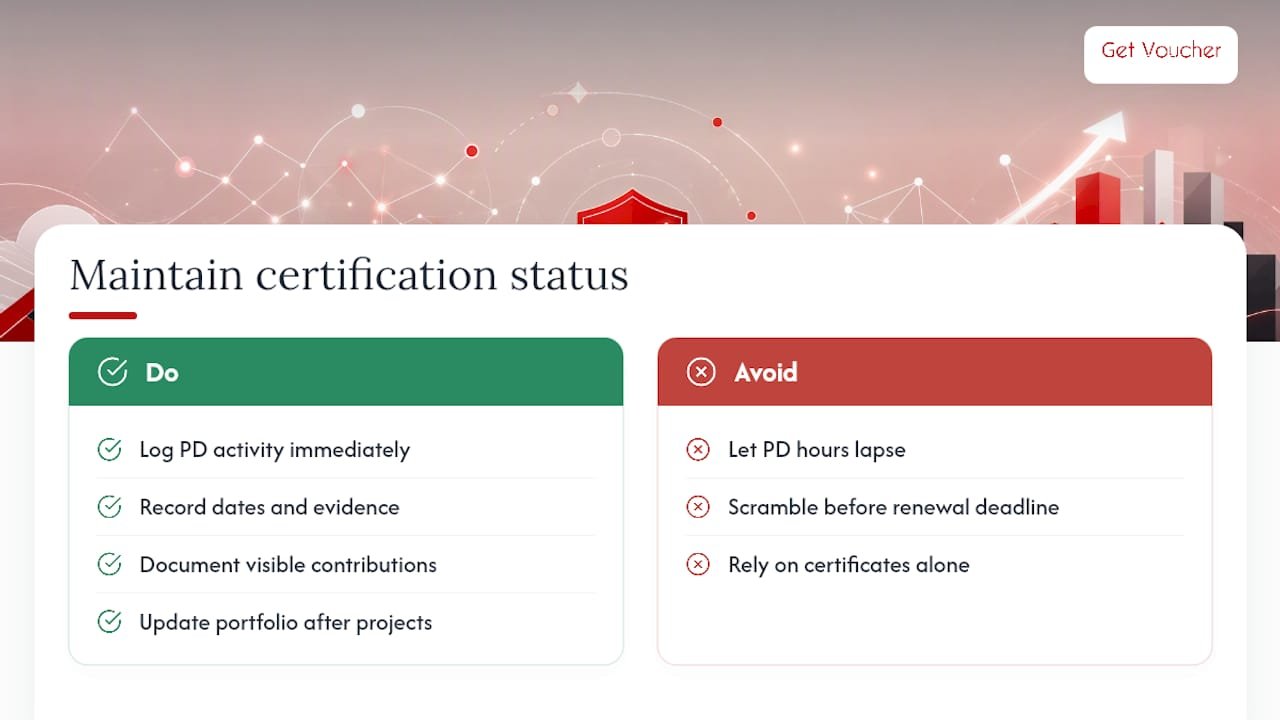
Certification isn’t a one-off achievement. Most credentials, IIBA’s core tiers included, require ongoing professional development hours to stay active, and letting that lapse means starting the eligibility clock over.
Build a habit of logging PD activity as it happens rather than scrambling before a renewal deadline. Attending a webinar, completing a short course, or contributing to a case study at work usually counts, but only if you record it with dates and evidence at the time.
Beyond the paperwork, professional reputation compounds through visible contribution: writing up a project retrospective, mentoring a junior analyst, or presenting a process improvement internally all reinforce the credential with proof it reflects real capability. Certifications carry the most weight when paired with demonstrable project experience, and employers increasingly look for both the letters after your name and concrete examples of the outcomes you’ve influenced. Keep a running portfolio of before-and-after project outcomes, not just certificates, and update it every time you close out a significant piece of work.
Who benefits most from certification right now?
My honest view is that experience should lead and certification should follow, not the other way round. A candidate with two solid projects and CCBA will usually out-interview someone with CBAP and no real delivery story. Combining Agile and product skills with core BA fundamentals tends to offer the strongest career leverage today, because most modern roles blur the two anyway. If you’re unsure which path fits, contact GetVoucher for guidance on preparation routes while BA vouchers are added to the platform.
— Rayan
Get ready for business analyst certification with GetVoucher
GetVoucher gives you one place to prepare for professional certification without the usual scramble across scattered course providers and study guides. While business analyst exam vouchers aren’t yet listed on the platform, GetVoucher already provides course access and preparation bundles that build the Agile, process improvement, and product skills that sit right alongside core BA fundamentals, and BA-specific vouchers are planned for the coming months as the catalogue expands.

If you want to start building complementary skills now, the Dual Agile Pack covering Scrum Master and Product Owner certification is a practical next step, and it pairs naturally with a future BA credential. For readers who’d rather build process improvement skills alongside their BA plans, the Dual 6Sigma Pack covers exactly that ground. Visit the GetVoucher certifications page to browse current course bundles, and contact GetVoucher directly for current details and availability on upcoming BA vouchers.