




The Scrum for Operations and DevOps Expert Certified (SODEC) credential from SCRUMstudy validates experienced IT and operations professionals in applying Scrum practices to operations and DevOps work. It suits Scrum Masters, DevOps practitioners and IT operations leads who already understand Scrum basics and want to extend them into release, incident and infrastructure work. If that matches your role, the GetVoucher course page is the logical next stop.
Table of Contents
- What the SODEC course covers
- Who should take SODEC and what you need first
- Syllabus content and exam format, verified against SCRUMstudy
- Applying Scrum to operations and DevOps
- Skills and career value
- How to prepare and enrol
- Is SODEC worth it for experienced practitioners
- Getting your SODEC voucher through GetVoucher
- Sources
- FAQ
What the SODEC course covers
SCRUMstudy positions SODEC as an advanced credential aimed at professionals who want to apply Scrum concepts specifically to operations and DevOps environments, rather than general software delivery. The course sits above entry level Scrum certifications because it assumes working familiarity with Scrum roles, events and artefacts, and builds on that foundation with operations focused application.
Based on SCRUMstudy’s official course page, candidates can expect:
- An overview of how Scrum principles extend into operations and DevOps contexts.
- Access to SBOK® Guide materials referenced by the provider as core study content.
- Course structure built around applying, not just learning, Scrum concepts in live operational settings.
This differs from foundational certifications such as Scrum Fundamentals Certified, which introduce Scrum terminology and roles without the operations and DevOps lens.
Who should take SODEC and what you need first
SODEC is built for people already working at the sharp end of delivery and operations, not newcomers to Scrum. The credential assumes you can hold a working conversation about sprints, backlogs and Scrum roles before you start layering operations practices on top.
Roles that typically find the content relevant include:
- Scrum Masters moving into or supporting DevOps teams.
- DevOps engineers responsible for release automation, monitoring and infrastructure as code, a scope reflected in UK occupational standards for the DevOps engineer role.
- IT operations leads and release managers coordinating cross functional delivery.
Readers newer to Scrum concepts are better served starting with Scrum Fundamentals Certified or the related Scrum for Operations & DevOps Fundamentals Certified before attempting SODEC.
Syllabus content and exam format, verified against SCRUMstudy
Official SODEC exam details, as published on SCRUMstudy’s certification page, cover the exam’s delivery method, structure and retake terms. Readers should check the current page directly before booking, since providers update formats and policies periodically.
- SCRUMstudy’s official syllabus content for SODEC centres on applying Scrum roles, events and artefacts within operations and DevOps workflows, as described on the provider’s own course page.
- Study materials referenced by SCRUMstudy include the SBOK® Guide and related course resources made available to enrolled candidates.
- Exam logistics, including question format, duration, pass threshold and retake policy, are set out on SCRUMstudy’s official certification page and should be confirmed there at the time of booking.
Official SODEC exam details are provider-set and subject to change. This is best treated as a confirmed statement rather than a quoted figure, since specific numbers shift between provider updates: SCRUMstudy’s certification page remains the source of truth for exam duration, question count and pass score.
Editorial exam readiness checklist (not part of the official syllabus):
- Re-read the SBOK® Guide sections relevant to operations and DevOps before booking.
- Confirm proctoring requirements and technical setup ahead of your exam slot.
- Review the current retake policy on the provider page so you know your options if a resit is needed.
Applying Scrum to operations and DevOps
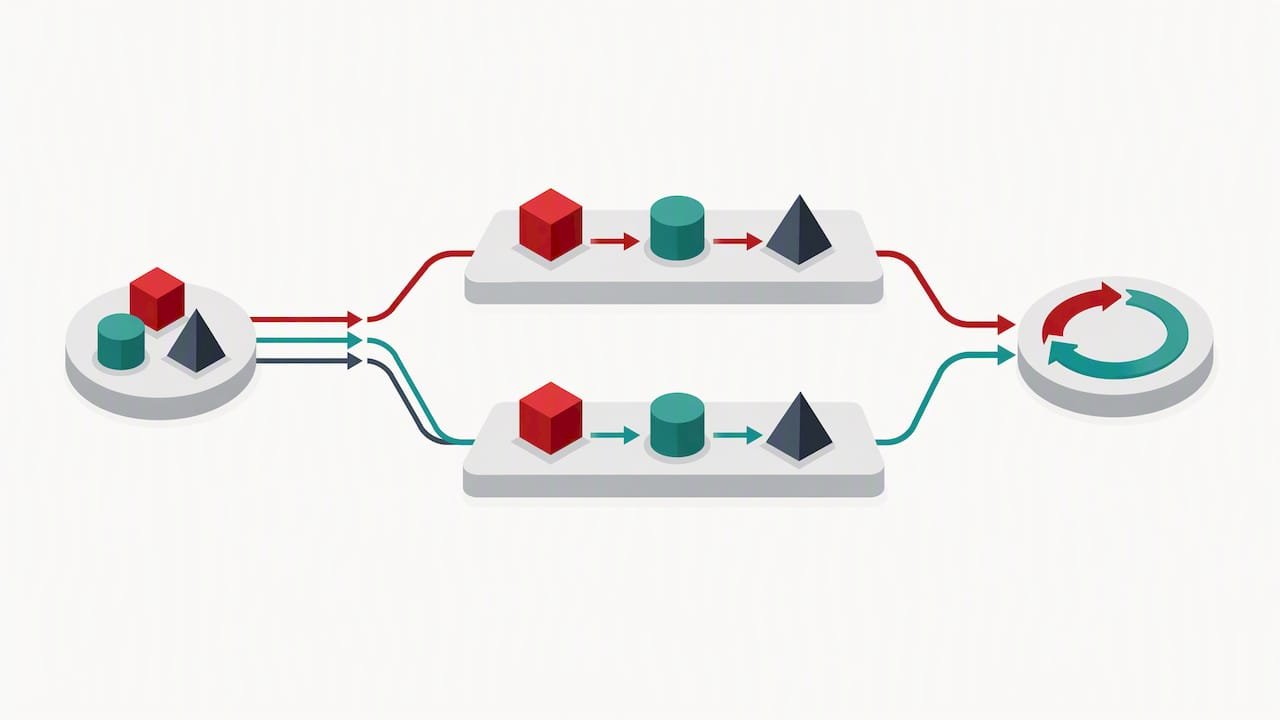
Scrum and DevOps are not interchangeable: Scrum is a framework for structuring work in short, inspectable cycles, while DevOps describes a broader set of cultural and technical practices for building and running software. SODEC sits at the junction, teaching how Scrum’s cross functional teams, transparency and inspect and adapt cycles can support operations and DevOps goals without replacing DevOps tooling or culture.
In practice, this mapping tends to show up as:
- Treating recurring incidents as backlog items reviewed and prioritised like any other sprint work (editorial practice, not an official SODEC syllabus item).
- Using sprint reviews to inspect deployment outcomes alongside feature delivery.
- Keeping runbooks as living backlog entries that get refined each sprint rather than static documents (editorial practice).
DORA framework, maintained independently of Scrum or SCRUMstudy, defines five specific software delivery performance metrics: lead time for changes, deployment frequency, failed deployment recovery time, change fail rate and deployment rework rate. The latest Quick Check update added deployment rework rate and refreshed benchmarks for throughput and stability. DORA presents these as diagnostic indicators of delivery performance, not as prescriptive rules for team structure.
Pro Tip: Share DORA metrics openly between development and operations rather than letting one team “own” them, since DORA’s own guidance on cross-functional use is built around avoiding siloed ownership.
Skills and career value
SODEC is designed to demonstrate knowledge of applying Scrum concepts in operational and DevOps contexts, rather than to certify a fixed set of technical outcomes. Employers reading the credential on a CV are likely to interpret it as evidence of structured thinking about incident handling, release cycles and cross-team collaboration.
Skills the credential signals include:
- Applying Scrum ceremonies and artefacts to operations backlogs and incident work.
- Collaborating across development, operations and release functions.
- Framing continuous improvement using inspect and adapt cycles.
- Supporting cross-functional teams responsible for both delivery and stability.
For career progression, SODEC may complement roles in DevOps leadership, operations management or Agile coaching, where it sits alongside practical experience rather than replacing it. Pairing it with a role-focused credential, such as a Scrum Master or Product Owner certification, can round out a candidate’s profile for broader delivery leadership roles.
How to prepare and enrol
Preparation for SODEC should draw on the materials SCRUMstudy confirms on its official page, principally the SBOK® Guide and any course-specific resources provided on enrolment. A sensible study plan for experienced practitioners involves reviewing Scrum fundamentals first, then focusing study time on the operations and DevOps application sections specific to SODEC.
- Review the SBOK® Guide sections referenced for SODEC before attempting practice questions.
- Confirm current exam format and proctoring requirements directly on SCRUMstudy’s page.
- Book your exam slot once comfortable with both Scrum fundamentals and the operations-specific content.
| Step | What to check | Where |
|---|---|---|
| Choose your course | SODEC course scope and materials | GetVoucher SODEC page |
| Confirm exam rules | Format, duration, retake policy | SCRUMstudy official page |
| Prepare | SBOK® Guide and course resources | Provider materials |
| Book exam | Proctoring and scheduling | SCRUMstudy booking system |
Vouchers and course access for SODEC are available through the GetVoucher course page, which also lists related preparatory options.
Is SODEC worth it for experienced practitioners
In my view, SODEC delivers the most value to practitioners who already live in the tension between fast-moving development cycles and the stability operations teams are expected to protect. If you’re still learning what a sprint or a Product Owner does, this credential will feel abstract rather than useful, so build that foundation first. GetVoucher’s role here is straightforward: it gives you a clear path to the voucher and study materials without adding complexity to a decision that should rest on your own experience and goals.
— Rayan
Getting your SODEC voucher through GetVoucher
GetVoucher operates as a voucher and access platform, not the certification body: SCRUMstudy and its parent organisation VMEdu set the syllabus, exam rules and credential standards. What GetVoucher adds is a straightforward way to find, compare and purchase the voucher you need without hunting across multiple provider sites.
On the GetVoucher SODEC course page, you can expect:
- Access to the course listing and voucher purchase option for SODEC.
- Links to related preparatory certifications, including Scrum for Operations & DevOps Fundamentals.
- A straightforward checkout process for professionals ready to book their exam voucher.
If you are weighing SODEC against other Scrum or Agile credentials, the complete Scrum and Agile guide on GetVoucher maps out the wider certification landscape. For pricing or availability on certifications not yet listed, contact GetVoucher directly, or browse the full certifications catalogue to compare your options.
Sources
This article draws on SCRUMstudy’s official SODEC course documentation for syllabus and exam details, DORA’s published metrics guidance for the five-metric model, and UK occupational standards for DevOps role context.
FAQ
Is Scrum still relevant in 2026?
Scrum remains widely used as a framework for structuring iterative work across software and, increasingly, operations teams. Its relevance depends on fit: teams managing unpredictable, fast-changing work tend to get more from it than teams with highly linear, low-variability processes.
Is a CSM certificate worth it?
A Certified ScrumMaster credential can demonstrate knowledge of Scrum roles, events and artefacts to employers, though its value depends on how it is combined with practical experience. It is generally seen as an entry point rather than a credential that guarantees career outcomes on its own.
What is the salary of a 7 year Scrum Master?
Salary for an experienced Scrum Master varies significantly by country, industry, company size and local market conditions, so there is no single reliable figure to quote here. Candidates researching compensation should consult current, geography-specific salary data rather than relying on generalised averages.
How much does PSM 1 cost?
PSM 1 is a certification offered by Scrum.org rather than by SCRUMstudy, so pricing details are not available through GetVoucher’s certification catalogue. For SCRUMstudy credentials such as SODEC, current pricing and voucher availability are listed on the GetVoucher course page.