




You can switch careers to Agile by choosing one role (most career changers start with Scrum Master), learning the framework from its official guide, earning one entry-level certification, and then building a small record of real team work that you can describe in an interview. The certificate gets you through the first filter. The practice is what you talk about afterwards. We offer SCRUMstudy certification vouchers, from a free Scrum Fundamentals Certified course to the paid Scrum Master tier, so the first step costs you nothing.
This guide is for project managers, analysts, team leads, graduates and people from outside tech who want a realistic plan. It separates Agile as a general way of working from Scrum as one specific framework, because that distinction decides which certification you need.
Table of Contents
- Agile, Scrum and the roles you are actually aiming for
- Which backgrounds move across most easily
- How long a switch takes
- A five-step route
- What a certificate does and does not do
- Moving on to coaching
- Perspective
- Where to start with us
- FAQ
- Sources
Agile, Scrum and the roles you are actually aiming for
Agile is a broad set of values and approaches for delivering work in small steps and adapting as you learn. Scrum is one framework inside that family. Kanban and others sit beside it. When a job advert says “Agile”, it often means Scrum in practice, but not always, so read the advert for the framework it names.
Scrum itself defines three accountabilities: the Product Owner, the Scrum Master and the Developers. Atlassian’s overview of Scrum roles describes the Product Owner as the person who defines and prioritises the backlog, the Scrum Master as the facilitator who removes obstacles, and the team as the people who deliver the work. It also notes that teams adopting Scrum do not have to change existing job titles, which is why you will see “Scrum Master” duties inside roles called delivery manager or team lead.
Two points from the current Scrum Guide are worth knowing before an interview:
- A Scrum Team is small, typically ten people or fewer, and Sprints are fixed-length events of one month or less.
- The Scrum Team commits to the Sprint Goal, not to a fixed batch of tasks.
Scrum Master or Product Owner?
The Scrum Master role suits people who enjoy facilitation, coaching and removing blockers. The Product Owner is accountable under the Scrum Guide for maximising the value of the product and for managing the Product Backlog, which suits people with a stronger business, customer or analysis background. “Product Manager” is a different thing: an organisational job title whose responsibilities vary by employer, not a fixed Scrum role. Our guide to Scrum Master versus Product Owner and our UK article on Product Owner versus Product Manager go deeper on the choice.
Which backgrounds move across most easily
A career-change guide published by Pigment in October 2026 says project managers moving to Scrum Master are the most common and usually the quickest transition, with business analysts, testers and team leads also moving well. It adds that backgrounds such as teaching, nursing and retail management can work, because they already involve running short huddles and working in quick cycles.
The same guide points to the hard part for project managers: letting go of assigning tasks. A Scrum Master is accountable for the team’s effectiveness but does not direct the team, set its deadlines or write its performance reviews. If you are coming from project management, our comparison of Scrum Master and Project Manager roles shows where the day-to-day work differs.
What employers look for in entry-level people
There is no single hiring standard, but two pieces of research give a useful picture of the skills that carry over:
- A 2024 study of 50 LinkedIn adverts for entry-level software project managers (United States) found that communication and technical knowledge were the most cited skills, at 53% of the 43 adverts that listed skills. Planning and managing followed at 49%, organisational skills at 35% and teamwork at 30%. Agile skills appeared in 23%.
- Western Governors University’s 2025 Durable Skills report, a survey of US employers, found 63.7% expect early-career candidates to show professionalism and 63.4% expect them to be coachable and open to feedback.
Both are American samples, so treat them as a guide to the kind of skills sought, not as UK hiring statistics. For you, the practical lesson is that facilitation, communication and planning experience from your current job is material for your CV, not something to apologise for.
How long a switch takes
Timelines vary a great deal, and any figure is an estimate rather than a promise. Pigment suggests planning six to twelve months from first reading to first offer, with a shorter path for people already in project or analyst roles inside a company that uses Scrum, and a longer one for those from teaching, nursing or retail. In its view, certification takes the least time and applying takes the most. A career guide from Himalayas, written about Agile project management roles, gives a wider range: roughly three to twelve months for a focused beginner and twelve to twenty-four months for a career changer re-positioning experience.
The spread tells you what drives the timeline: how much relevant experience you can show, and whether you can find a team to practise with. The course itself is the short part.
A five-step route
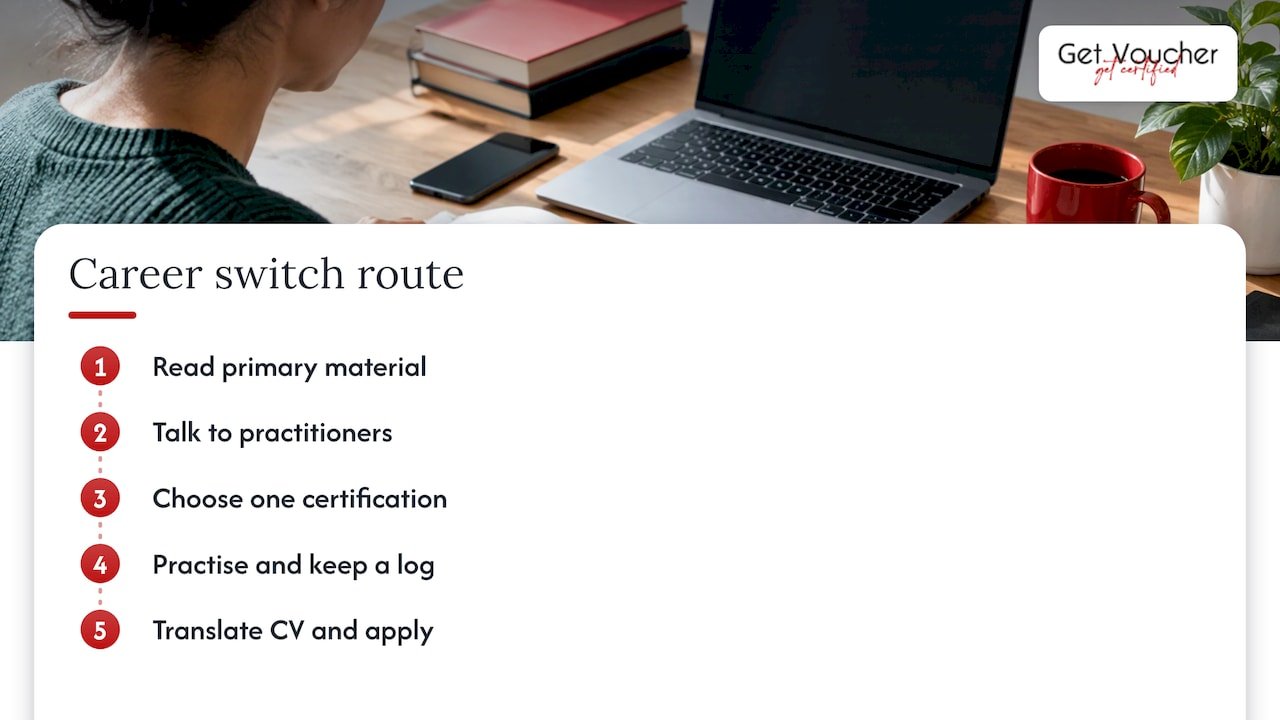
1. Read the primary material first
Start with the Scrum Guide. It is short, and everything else, including any certification, builds on its vocabulary: the Product Goal, the Sprint Goal, the Sprint Backlog, the events and the accountabilities. Read it twice, then read the Agile Manifesto so you can explain the difference between the values and the framework.
Note that SCRUMstudy certifications are also based on the provider’s own SBOK® Guide, which is a separate document from the Scrum Guide. Keep the two apart in your notes, and use the guide named in your certification’s syllabus when preparing for its exam.
2. Talk to people doing the job
Speak to two working Scrum Masters or Product Owners, inside your company if possible. Ask what a normal week looks like and what they would do differently. You will learn which parts of the role match your strengths before you spend any money.
3. Choose one certification and keep the rest for later
Pick a single entry credential and match it to the role. Details such as prerequisites, exam format and validity are set by each provider, so check the provider’s page for the credential you choose and do not assume that one provider’s rules apply to another’s.
The SCRUMstudy credentials we offer, with our published prices:
| Credential | Best suited to | Our price |
|---|---|---|
| Scrum Fundamentals Certified | Testing your interest, first vocabulary | £0 |
| Scrum Developer Certified (SDC®) | Joining a Scrum Team as a Developer | £99 |
| Scrum Master Certified (SMC®) | Scrum Master route | £249 |
| Scrum Product Owner Certified (SPOC®) | Product Owner route | £299 |
| SCRUM Agile Master Certified (SAMC™) | Deeper Scrum Master level | £349 |
| Dual Agile Pack: Scrum Master and Product Owner | Covering both roles | £519 |
All are one-off prices. Two exam facts to hold on to: the SCRUMstudy Scrum Fundamentals Certified exam is an online, unproctored exam of 40 questions in 60 minutes, and the SMC® exam is an online, unproctored exam of 100 questions in 120 minutes. The SAMC™ also uses an online unproctored exam. Unproctored describes how the exam is supervised, and says nothing about how hard it is or whether it is open-book.
Our certifications are SCRUMstudy credentials. We do not sell Scrum Alliance or Scrum.org credentials, which are separate programmes with their own exams and fees. If you want to understand what each tier costs and what is included, our Scrum Master certification cost guide separates exam fees, training, optional preparation and renewals.
4. Run real practice and keep a log
Pigment’s advice is to run three to six real Sprints and keep a log of what happened. You do not need a Scrum Master title to do this. You can propose a short Sprint format to a volunteer group, a side project, a charity, or your own team at work. Note the problem, what you did as facilitator, what the team decided and what changed.
This log is optional practical work. No certification requires it, and no exam credits it, but it gives you the one thing a certificate cannot: a specific story. Our article on becoming a Scrum Master without experience shows how to structure that log.
5. Translate your CV and apply from where you stand
Rewrite your existing achievements in the language of the role: facilitated, unblocked, coached, shortened feedback loops. Apply first inside your own organisation, where people already trust you, then outward. Keep learning after you start, because the first role teaches you things no course can.
What a certificate does and does not do
A certification shows you have studied a framework to a defined standard. It does not prove how you will perform in a role, and it does not guarantee a job, a salary or a promotion.
Job-advert data shows how varied the picture is. CertWorthIt’s October 2026 analysis of US Adzuna adverts found Scrum Master adverts naming several different credentials, and notes that a mention can be a requirement, a preference or an offer of training. So read each advert for what it asks, and do not assume that one credential is wanted everywhere.
Because entry-level Scrum certification is accessible, many applicants hold one. Pigment’s view is that what sets candidates apart is a concrete example of helping a team through a problem it could not solve alone. Put the two together: certificate first for the shared vocabulary, practice log second for the proof.
Moving on to coaching
Agile coaching is rarely a first job. Toptal’s August 2026 profile of the role says most coaches arrive after years as Scrum Masters, project managers or product owners, and that coaching is broadening into distributed, contract and fractional models. If coaching is your long-term aim, treat a Scrum Master role as the first rung, and look at the deeper SAMC™ level when you are ready for it.
Perspective
Most people who write to us about changing career are not short of enthusiasm. They are short of a sequence. They have read five articles, watched ten videos and still cannot say which credential to buy first.
Our view is that the sequence should be cheap at the start and specific at the end. Start with a free introductory certification, because it lets you find out whether Scrum’s way of thinking suits you before you commit money. Move to one role-specific credential once you know which role you want. Then spend your time on practice, not on collecting more certificates.
We built GetVoucher around that progression: introductory courses at £0, role certifications at published one-off prices, and bundles for people who want to cover both the Scrum Master and Product Owner perspectives. Different people need different routes, and what we aim to remove is the time spent searching across scattered courses, documents and videos.
A certificate is the start of your evidence, not all of it. Pair it with a log of real Sprints and you have both the language and the story.
Rayan
Where to start with us
If you are still deciding, begin with the free Scrum Fundamentals Certified course. When you know the role you want, the Scrum Master Certified (SMC®) voucher is £249 and the Scrum Product Owner Certified (SPOC®) voucher is £299. Inclusions such as learning materials and exam scheduling support differ by product, so each course page lists what that voucher covers. GetVoucher has a commercial relationship with certification providers such as VMEdu, the company behind SCRUMstudy.
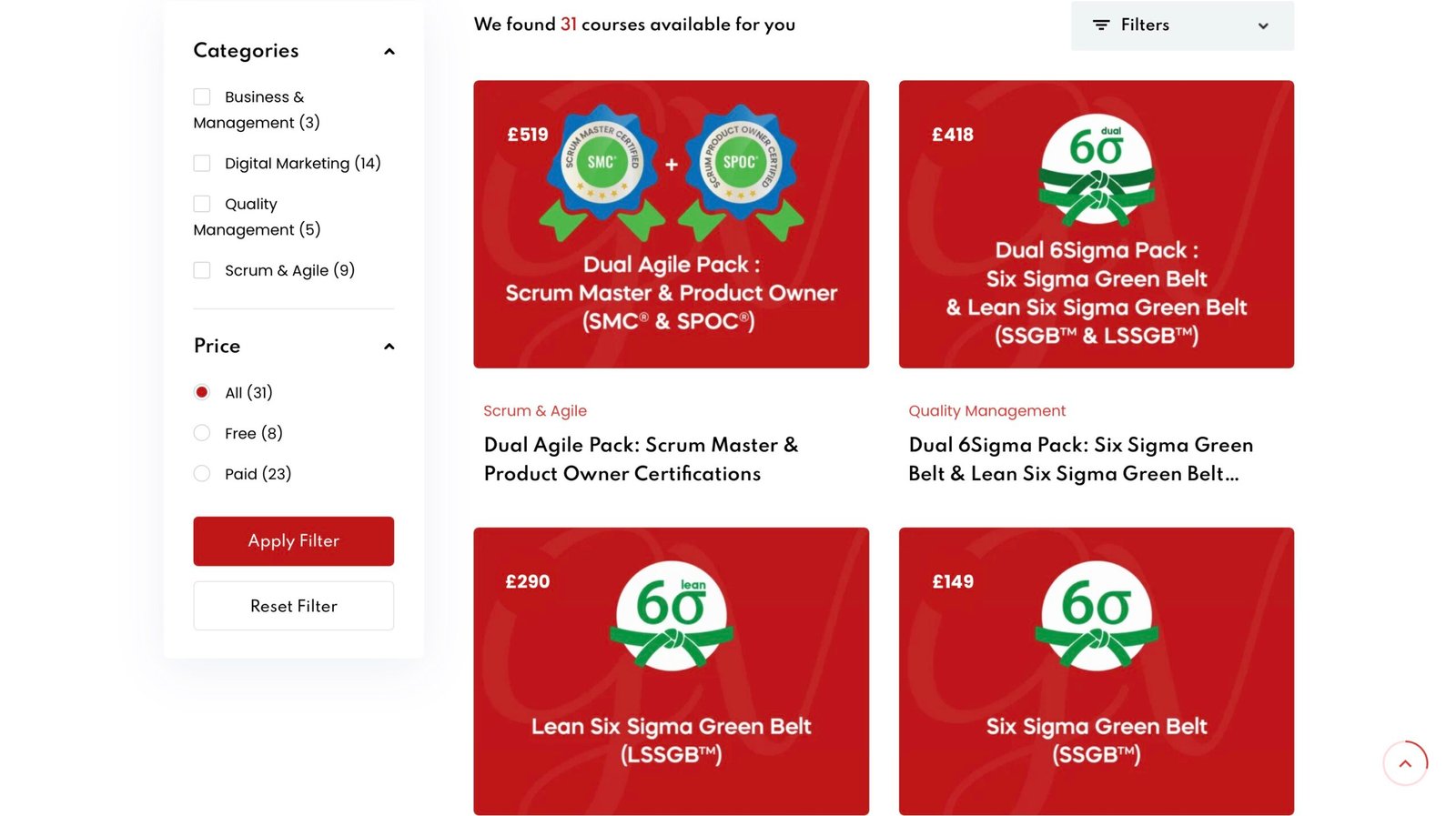
You can see the full range on the GetVoucher catalogue.
FAQ
How long does it take to learn Agile and apply for roles?
Sources give wide ranges, from about three to twelve months for a focused beginner up to twelve to twenty-four months for a career changer re-positioning experience. The certification is the short part. Finding practice and applying take longer, so plan around those.
Do I need a certification to switch to Agile?
No certification is a legal requirement for working in Agile, and Scrum itself does not require one. A recognised entry-level credential helps you learn the framework’s vocabulary and shows commitment on a CV. Pair it with practical examples so you can show how you have applied it.
Which Agile role is easiest to move into?
The project manager to Scrum Master move is described as the most common transition, because planning, stakeholder work and delivery experience carry over. Analysts, testers and team leads also move across. The role you choose should match your strengths: facilitation points to Scrum Master, business and product judgement points to Product Owner.
Is Scrum the same as Agile?
No. Agile is a broad set of values and approaches, and Scrum is one framework within it. Kanban and other methods are also used. Check which framework a job advert names before choosing a certification.
Sources
- Agile Scrum Roles, Atlassian
- The 2020 Scrum Guide
- Career Change to Scrum Master: Certs, Pay and Timeline, Pigment
- Investigating Entry-Level Software Project Managers’ Skills, SciTePress 2024
- Final Durable Skills 2025, Western Governors University
- Complete Agile Project Manager Career Guide, Himalayas
- Are certifications worth it? What job ads say, CertWorthIt
- What Is an Agile Coach? Toptal