




PRINCE2 and Agile answer two different questions: PRINCE2 governs the investment, Agile governs delivery. Where regulatory oversight, a fixed budget or a formal business case matter, PRINCE2 provides the control points; where requirements shift and feedback drives the next step, Agile provides the rhythm. Many organisations combine the two through PRINCE2 Agile (Version 2), using governance to protect the business case while teams deliver iteratively inside it.
Table of Contents
- Comparing planning, roles, documentation and change control
- When to choose PRINCE2, Agile, or a hybrid
- What PRINCE2 Agile Version 2 does in practice
- Putting governance and delivery into operation
- Building the right certification path for your role
- A pragmatic view on choosing between them
- Getting started with GetVoucher’s Agile and Scrum vouchers
- FAQ
- Sources
Comparing planning, roles, documentation and change control
PRINCE2 and Agile diverge most visibly in how they plan, who holds authority, and what gets written down. PRINCE2 organises work into management stages with defined control points, where a project board reviews progress and reconfirms the business case before the next stage begins. Agile, in its various forms, organises work into short, repeatable cycles of planning, building and reviewing, with priorities reassessed as feedback arrives.
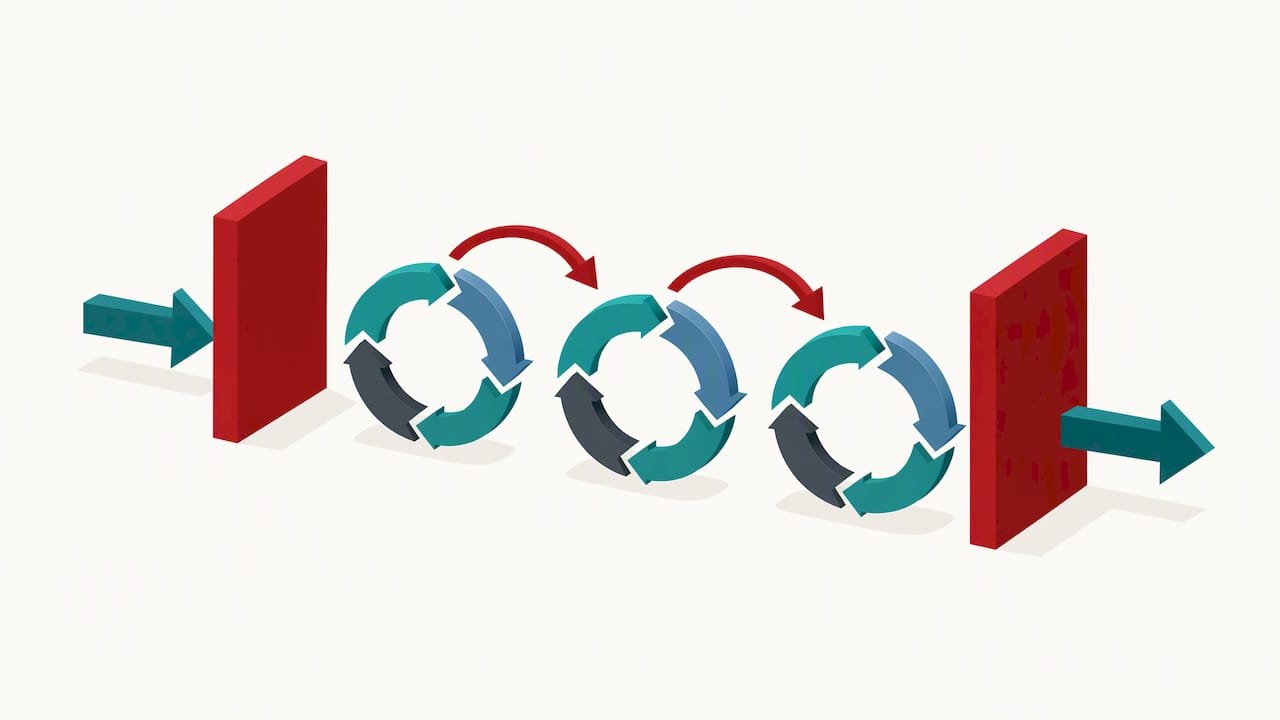
Roles reflect the same split. PRINCE2 places accountability with a project board, a project manager and a defined set of governance roles responsible for the business case, risk and reporting. Agile approaches distribute day-to-day decisions closer to the delivery team, with a person responsible for ordering the work and another responsible for removing obstacles and supporting the team’s process, though the specific titles and responsibilities vary by framework.
Documentation expectations also differ sharply:
- PRINCE2 expects a business case, stage plans, risk and issue registers, and formal end-stage reports that the project board reviews at each control point.
- Agile frameworks favour lightweight, working artefacts, such as a prioritised backlog and visible progress boards, updated continuously rather than produced for a gate review.
- Change control under PRINCE2 routes exceptions through the project board when tolerances are breached, with an evaluation question of pursue, rebaseline or stop.
- Change under Agile is handled through ongoing reprioritisation, where new information is simply weighed against existing priorities ahead of the next cycle.
Success looks different too. PRINCE2 measures success against the approved business case, time, cost and quality tolerances signed off by the board. Agile approaches measure success through working outputs delivered each cycle and the value stakeholders confirm during review. Neither measure is wrong, they simply answer different questions about the same project.
When to choose PRINCE2, Agile, or a hybrid
Deciding between PRINCE2, Agile or a combination comes down to a handful of practical questions rather than a philosophical preference.
- How much uncertainty sits in the requirements? High uncertainty favours iterative delivery; well-understood scope favours upfront planning.
- What regulatory or compliance obligations apply? Audited, regulated or publicly funded work tends to need the formal decision trail PRINCE2 provides.
- What does the contract require? Fixed-price, fixed-scope contracts sit more naturally with stage-based planning; time-and-materials arrangements tolerate iterative scope changes more easily.
- How complex is the stakeholder landscape? Multiple sponsors, external auditors or cross-organisational funding usually call for clearer governance.
- How capable and self-organising is the delivery team? Teams experienced in iterative working can absorb more delegated decision-making.
A regulated public-sector programme with fixed funding and external audit requirements typically favours PRINCE2-led governance. A new product build with uncertain requirements and a small, experienced team typically favours an Agile approach without heavy governance overhead. A large systems integration programme, with multiple delivery teams, external suppliers and a board that needs assurance, often favours a hybrid: PRINCE2 Agile v2 governance wrapped around Agile delivery teams. Industry commentary frames this as two separate questions, how to govern the investment and how to deliver the work, rather than a single either/or choice.
Choosing the wrong model carries real cost: heavy governance on a genuinely uncertain product tends to slow learning, while skipping governance on a regulated or high-risk programme leaves sponsors without the assurance they are accountable for.
Pro Tip: Ask the governance question and the delivery question separately before picking a framework, they rarely have the same answer.
What PRINCE2 Agile Version 2 does in practice
PRINCE2 Agile Version 2 keeps PRINCE2’s business justification, roles and decision points intact while giving delivery teams room to work iteratively inside them. The core idea is tailoring: fix time and cost tolerances at the governance level, while allowing scope to flex within each stage so teams can reprioritise as they learn.
In practice, this means:
- Stage boundaries are set to align with release points, so the project board reviews progress at moments that match what delivery teams have actually shipped.
- Tolerances are defined at the stage level, giving teams room to reorder backlog items without triggering an exception every time priorities shift.
- Reporting translates delivery-team progress, such as completed work and remaining backlog, into the language the board expects: cost, time and benefit realisation.
- Acceptance criteria are agreed before work starts, so a work package handed to a delivery team maps cleanly onto backlog items without ambiguity about what “done” means.
A common pitfall is treating a work package as a fixed specification rather than an intent, which forces teams back into rigid upfront planning and removes the flexibility PRINCE2 Agile v2 is meant to preserve. Another is skipping the translation step in reporting, leaving sponsors reading sprint jargon they cannot connect to the business case.
Putting governance and delivery into operation
Turning the comparison into daily practice means deciding, in advance, who escalates what and how often sponsors hear from the team. Escalation stays with the project board or equivalent governance body whenever a stage tolerance is at risk, while day-to-day prioritisation decisions stay with the delivery team.
- Work packages should state outcomes and acceptance criteria, not implementation detail, so delivery teams can translate them into backlog items without a second round of negotiation.
- Reporting cadence should match stage boundaries rather than every delivery cycle, keeping sponsors informed without burying them in operational detail.
- Minimal governance artefacts, such as a current risk register and a one-page status summary, are usually enough to keep a board confident between formal reviews.
- Change should be handled through the tolerances agreed at stage level first, with escalation reserved for anything that threatens the approved business case.
Government guidance on agile governance makes a related point: decisions should sit at the right level, with trust-and-verify replacing heavy upfront sign-off wherever the risk allows it. That principle underpins how PRINCE2 Agile v2 distributes authority between board and team.
Building the right certification path for your role
Matching a certification to your role avoids wasted study time and points you towards the skills you will actually use. A project manager working in governed environments typically looks at PRINCE2 pathways, while a practitioner moving into iterative delivery roles looks towards Scrum-specific or broader Agile certifications instead.
- A Scrum Master role aligns with the Scrum Master Certified (SMC®) pathway, which focuses on facilitating the team’s process and removing obstacles.
- A Product Owner role aligns with the Scrum Product Owner Certified (SPOC®) pathway, which focuses on backlog ownership and prioritisation.
- Someone leading Agile adoption across teams, rather than running a single Scrum team, typically looks at the SCRUM Agile Master Certified (SAMC™) pathway for a broader view of Agile leadership.
- Anyone new to the subject can start with a foundation-level course before progressing to a practitioner-level credential.
Before buying any certification voucher, check the exam format (online proctored or in-person), confirm voucher validity dates, and read the syllabus against the role you actually want to move into. GetVoucher lists these Agile and Scrum pathways, including the Dual Agile Pack combining Scrum Master and Product Owner training, as part of its certification catalogue.
A pragmatic view on choosing between them
The useful question is rarely “PRINCE2 or Agile”, it is “what does this specific project need to protect, and what does it need to learn quickly”. A large regulated rollout with multiple funders is a reasonable case for PRINCE2 governance wrapped around Agile delivery teams, because the board needs assurance while the team still needs room to adapt. Certification in either discipline, or both, is a practical way to build the judgement that decision requires.
— Rayan
Getting started with GetVoucher’s Agile and Scrum vouchers
GetVoucher operates as a voucher platform for certification pathways built by SCRUMstudy, working with VMEdu, including the SMC, SPOC and SAMC credentials discussed above. Buying a voucher through GetVoucher gives you access to self-paced study materials, which suits a working professional who needs to prepare around a job rather than around a classroom timetable.
- Scrum Master Certified (SMC®) is listed at £199 one-off on GetVoucher.
- Scrum Product Owner Certified (SPOC®) is listed at £199 one-off on GetVoucher.
- SCRUM Agile Master Certified (SAMC™) pricing is available on request directly from GetVoucher.
| Certification | Focus | Listed price |
|---|---|---|
| Scrum Master Certified (SMC®) | Facilitating team process | £199 one-off |
| Scrum Product Owner Certified (SPOC®) | Backlog ownership and prioritisation | £199 one-off |
| SCRUM Agile Master Certified (SAMC™) | Broader Agile leadership | Price on request |
If you are weighing up roles before you buy, the Scrum Master vs Product Owner comparison breaks down which path fits your day-to-day responsibilities. Browse the full certifications catalogue to compare pathways before committing to a voucher.
FAQ
Is PRINCE2 still relevant in 2026?
PRINCE2 remains a widely used governance framework for projects needing formal business justification, stage control and board-level assurance. Its relevance depends on the project context rather than the calendar year, regulated and publicly funded work in particular continues to rely on its structure.
Is PRINCE2 an agile framework?
PRINCE2 on its own is a governance method, not an agile delivery framework. PRINCE2 Agile Version 2 extends it specifically to combine that governance with agile delivery techniques.
Which is harder, PMP or PRINCE2?
Difficulty depends on a candidate’s background and familiarity with each body of knowledge rather than one exam being universally harder. Both require structured study of distinct governance and process frameworks, and neither has a published, independently verified difficulty comparison.
Which is better, PMP or Agile?
PMP and Agile certifications serve different purposes: PMP covers broad project management knowledge, while Agile certifications such as SMC or SPOC focus on iterative delivery roles. The better choice depends on whether your work centres on formal project governance or on hands-on Agile delivery.
Sources
- Stop Asking “Agile, Waterfall or PRINCE2?” – PeopleCert community
- Gov
- PRINCE2 Agile Practitioner (Version 2) — PeopleCert