




For CV-grade recognition, choose a regulated award like the CIM Level 4 Award in Search Engine Optimisation. For hands-on tool mastery, platform professional badges such as Google Skillshop certifications deliver practical, job-ready skills. For future-facing visibility work, an AEO (Answer Engine Optimisation) course prepares you for how AI search is reshaping content strategy.
Table of Contents
- Quick shortlist: the SEO certification routes to consider
- What recognised credentials cover and how they differ
- How to choose the right SEO certification for your goals
- Course formats, time commitments and what to expect from assessments
- Emerging training: AEO and AI-focused SEO courses
- Certification versus demonstrable experience
- Getting your certification voucher through GetVoucher
- FAQ
- Sources
Quick shortlist: the SEO certification routes to consider
Before you commit time and money to any course, it helps to know which category you actually need. SEO credentials fall into four broad groups, each suited to a different stage of your career and a different kind of employer.
- Free entry-level badges build foundational knowledge and give you something shareable on LinkedIn while you decide whether SEO is worth pursuing further.
- Tool and platform professional badges, including courses from Semrush Academy and Moz Academy, prove you can operate specific software and run real campaigns.
- Regulated, employer-recognised awards such as the CIM Level 4 Award in Search Engine Optimisation carry formal credit weight and suit anyone who needs a credential that holds up in a structured hiring process.
- Specialist advanced courses, covering technical SEO or the newer AEO/AI space, help you carve out a niche once you already have the fundamentals.
None of these routes is inherently better than the others. They simply answer different questions. A free badge answers “do I understand the basics?” A platform certificate answers “can I run this tool?” A regulated award answers “does a credentials committee or HR system recognise this qualification?” An AEO course answers “am I ready for how search behaviour is changing?”
Most working professionals end up combining at least two of these categories over the course of a few years. Someone who starts with a free Semrush Academy module, for example, often moves on to a platform professional badge within twelve months, then adds a regulated award once they are applying for roles with a formal person specification. Career switchers tend to compress this timeline, picking a platform badge and a regulated award close together to build a credible CV quickly.
The order that works best depends on your starting point. If you are new to marketing altogether, start with a free foundational course before spending on anything else. If you already run campaigns but lack formal recognition, the regulated award is probably your highest-value next step. If you are already established and want to stay ahead of how AI assistants surface content, the specialist AEO route deserves a look sooner rather than later.
What recognised credentials cover and how they differ
The biggest confusion in SEO training comes from treating all “certifications” as equivalent. They are not. A regulated qualification, a platform certificate and an independent academy course differ in depth, assessment rigour and who actually stands behind the credential.
Regulated awards sit at the formal end of the spectrum. The CIM Level 4 Award in Search Engine Optimisation carries 10 credits and a Total Qualification Time of 100 hours, including 80 guided learning hours, and typically requires a year of relevant industry experience or a Level 3 qualification to enrol. Assessment is a multiple-choice onscreen exam, and because the qualification sits within a formal credit framework, it tends to carry more weight in structured hiring processes, particularly in larger organisations and agencies with established progression ladders.
Platform certificates work differently. Google’s Skillshop professional certifications focus on procedural, tool-specific knowledge, and according to Google’s own guidance, some professional-level exams have been piloted with virtual proctoring and may involve fees as the programme evolves. These exams exist to confirm you can operate inside a specific platform rather than to validate broader strategic knowledge, which is exactly why they pair well with, rather than replace, a regulated award.
Independent academies occupy a middle ground. Moz’s SEO Essentials Certification is a six-part, on-demand series ending in a 50-question final exam, with an 80% pass mark typical for candidates. It is not a regulated qualification, but it is a credible way to demonstrate applied fundamentals, especially when paired with case studies showing you have used what you learned.
A few distinctions worth keeping in mind as you compare options:
- Regulated awards require formal entry criteria and sit within national credit frameworks, which matters most for CV screening and some public-sector or agency roles.
- Platform certificates prioritise procedural competence with a named tool and often use stricter exam security for their professional tier.
- Independent academy courses bridge the gap, offering structured syllabuses and a final exam without the regulatory overhead of a formal award.
- Specialist credentials, including technical SEO and AEO training, assume existing fundamentals and focus on a narrow, fast-moving skill area.
Choosing between these is less about which is “best” in the abstract and more about what a specific employer or client will actually recognise.
How to choose the right SEO certification for your goals
Picking a certification works best as a short, deliberate process rather than a gut decision based on marketing copy. Run through these steps before you pay for anything.
- Match the level to your experience. Entry-level badges suit career switchers with no marketing background; practitioner-level platform certificates suit people already running campaigns; regulated awards and specialist courses suit professionals aiming for strategic or senior roles.
- Check the assessment format and security. A proctored, timed exam with a defined pass mark, such as the 80% threshold common to Moz’s and Google’s professional-tier assessments, signals a stricter credential than a self-marked quiz.
- Confirm whether the credential is regulated. If a job description or internal HR policy specifically asks for a recognised qualification, an Ofqual-recognised award like CIM Level 4 answers that requirement in a way a vendor badge cannot.
- Work out the real time and cost commitment, including guided learning hours, any renewal fee and how the course fits around your current job.
- Ask the provider directly about renewal cycles, retake policy and whether the certificate is time-limited before you commit.
Pro Tip: Before paying for any course, email the provider and ask exactly what the final assessment involves and how long the certificate remains valid: the answer tells you more about the credential’s real weight than the marketing page does.
Cost and renewal burden deserve particular attention. A free badge has no ongoing financial cost but may need to be retaken as platforms update their interfaces. A regulated award is usually a larger upfront investment but does not expire in the way many vendor certificates do. Matching this trade-off to your actual career timeline, rather than choosing on price alone, keeps you from either overspending on credentials nobody checks or underinvesting in the one that actually moves your CV forward.
Course formats, time commitments and what to expect from assessments
Course length and assessment style vary enormously across SEO credentials, and the labels providers use do not always make that obvious. A Total Qualification Time figure, like the 100 TQT and 80 guided learning hours attached to the CIM Level 4 Award, tells you roughly how many hours of structured and independent study to expect, which is far more useful for planning than a vague “self-paced” label.
Assessment styles fall into a few recognisable patterns:
- Multiple-choice onscreen exams, used by CIM’s Level 4 award, test applied knowledge against a fixed syllabus.
- Timed final exams with a percentage pass mark, such as Moz’s 50-question assessment with an 80% pass mark typical for candidates, confirm you have absorbed a defined curriculum.
- Virtually proctored professional exams, which Google has piloted for some Skillshop professional certifications, add identity verification and stricter monitoring to preserve credential value.
- Portfolio or project-based assessment, more common in independent academy tracks, asks you to demonstrate applied work rather than answer fixed questions.
Validity and renewal also differ sharply by provider. Regulated awards like CIM Level 4 do not expire once earned. Many vendor and platform certifications, by contrast, run on roughly annual cycles, a pattern commonly reported across tool and platform certifications, which exists because search engines and ad platforms change features often enough that a credential earned two years ago may no longer reflect current practice. If you are stacking several platform badges, budget time each year for retakes rather than assuming a one-off effort covers you indefinitely.
A badge alone, whatever its source, only goes so far with employers. Pairing a certificate with a short portfolio, case study or before-and-after ranking example gives a hiring manager something concrete to evaluate alongside the credential itself.
Emerging training: AEO and AI-focused SEO courses
Answer Engine Optimisation courses teach how AI-driven search systems choose which content to cite and recommend, a skill set that barely existed in SEO training three years ago. Ahrefs’ AEO course covers tactics for getting cited by AI platforms, alongside newer technical concepts like GPTBot behaviour and the llms.txt file, which some sites now use to signal how AI crawlers should treat their content.
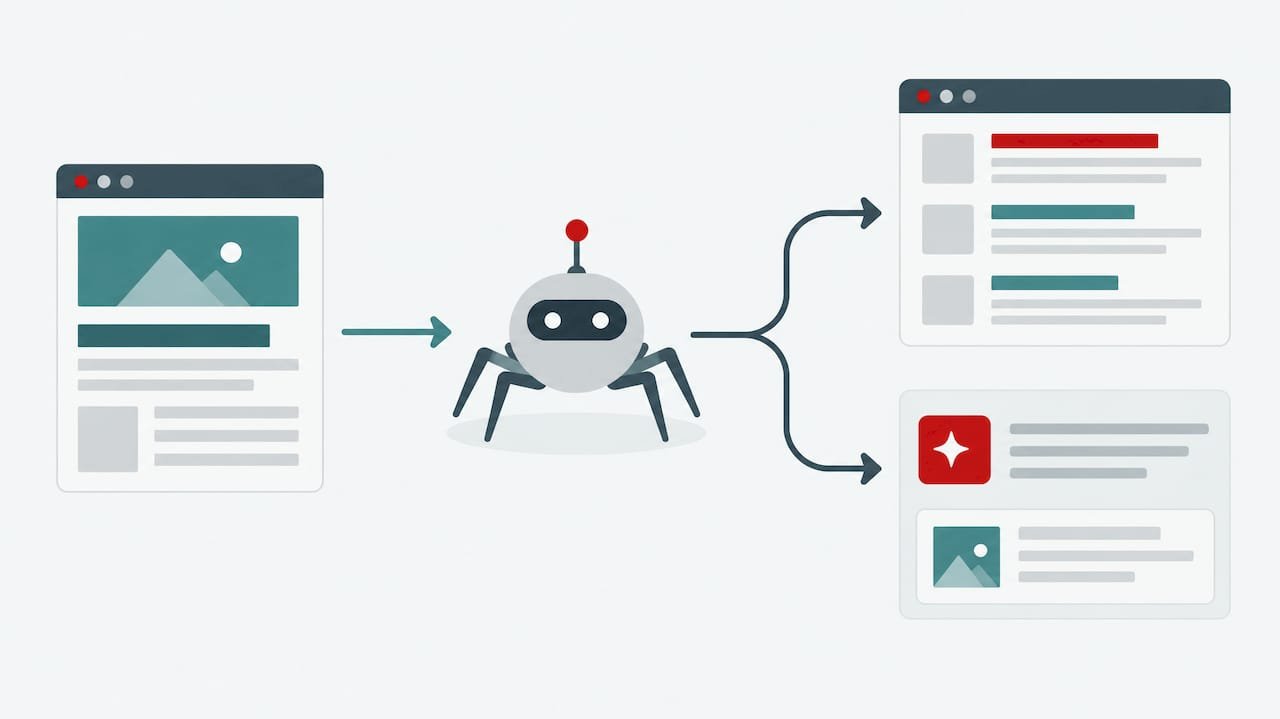
AEO is best understood as a layer on top of existing SEO knowledge rather than a replacement for it. A primer on AEO for local businesses makes a similar point: the fundamentals of structured, well-organised content still matter, but how that content gets surfaced and cited by AI assistants introduces new variables worth understanding separately. This makes AEO training a logical addition for SEO professionals who already have solid technical and on-page foundations, rather than a starting point for complete beginners.
Content strategists, technical SEOs and anyone producing high volumes of informational content stand to benefit most from this kind of course, since AI-driven citation behaviour directly affects how that content gets discovered.
- Prompt-friendly content structuring so AI systems can parse and quote your material accurately.
- Awareness of crawler-specific rules, including how GPTBot and similar bots interact with your site.
- Revised content brief practices that account for AI overview and assistant-style search results, not just traditional ranking factors.
Expect practical outcomes rather than guaranteed ranking changes: a reasonable goal after completing an AEO course is a revised content brief template and a clearer sense of which existing pages are well positioned for AI citation.
Certification versus demonstrable experience
A regulated award carries real weight when you are being screened against a formal person specification, but it will not substitute for proof that you can actually move a campaign forward. The strongest CVs stack all three layers: platform badges for tool fluency, a regulated award for formal recognition, and a portfolio of real case work for credibility with clients and hiring managers alike. After passing any certification, the single most useful next step is applying it immediately, on a real site, a freelance project or even a personal blog, so the credential sits alongside evidence rather than standing alone.
— Rayan
Getting your certification voucher through GetVoucher
Once you know which route fits your goals, the practical barrier is usually cost and scheduling rather than choice. Vouchers are available for certification courses and exams, including search marketing credentials, enabling access to provider materials and exam scheduling without needing to juggle separate purchases across multiple sites.
Our Search Marketing Expert voucher gives you a structured, self-paced route into search marketing certification, and our broader Digital Marketing Professional pathway suits anyone who wants SEO skills alongside wider digital marketing competence. If you are starting from scratch, Digital Marketing Fundamentals is a lower-cost entry point before you commit to a fuller programme. Bundled options reduce the need to piece together coaching, documents and videos from separate providers, which matters most if you are studying around a full-time job.
Browse the full range on our certifications page and pick the voucher that matches the stage you are at.
FAQ
Is SEO dead now with AI?
No. AI search features have changed how results are surfaced, but SEO fundamentals, including technical health, content quality and authority signals, still determine whether a site gets found or cited. Emerging AEO training exists precisely because AI-driven discovery is a new layer on top of SEO, not a replacement for it.
Is SEO still worth it in 2026?
SEO remains a core discipline for any business that depends on organic search or AI-driven discovery for visibility. Demand for practitioners who understand both traditional ranking factors and newer AEO concepts continues to shape current course offerings from providers such as Ahrefs and Moz.
Is SEO high paying?
Salary outcomes vary by role, seniority, employer and location, and no certification guarantees a specific salary or job outcome. A regulated award or platform certificate can support a stronger application, but pay depends on the broader context of your experience and the market you are applying in.
What is the best SEO course?
There is no single best course: the right choice depends on your goal. A regulated qualification like the CIM Level 4 Award in Search Engine Optimisation suits formal CV recognition, while platform courses from providers like Moz Academy suit hands-on tool skills.
Sources
- CIM Level 4 Award in Search Engine Optimisation (course page)
- Professional certifications for Skillshop — Google Support
- SEO Essentials Certification — Moz Academy