




Career changers and professionals new to process improvement generally do best starting with an exam-only Yellow or Green Belt, while experienced practitioners aiming to lead projects benefit more from a project-validated Black Belt. The main trade-off is speed versus proof: exam-only routes get you certified faster, project-backed credentials carry more weight with employers who want evidence. Check the comparison below, and if a Green or Yellow Belt voucher suits your stage, GetVoucher gives you a quick way to access one.
Table of Contents
- Comparing Six Sigma belt levels side by side
- What each belt actually means on the job
- How to choose the right certification for your background
- Why GetVoucher is a practical route to Green and Yellow Belt access
- When certification earns its cost
- Get your Six Sigma voucher and start preparing
- FAQ
- Sources
Comparing Six Sigma belt levels side by side
Choosing between Yellow, Green and Black Belt comes down to five questions: what you already know, how you’ll be assessed, how the exam works, what it costs, and who the credential actually suits. The table below lays out each belt against those criteria, drawing on how the two best-known certifying bodies, IASSC through PeopleCert and ASQ, structure their programmes.
| Belt | Typical prerequisites | Assessment type | Exam format and pass mark | Typical cost band | Best for |
|---|---|---|---|---|---|
| Yellow | None | Exam only | Closed-book, computer-based | Low | Beginners, support staff, anyone testing interest in process improvement |
| Green | None for IASSC; ASQ’s CSSGB asks for three years of relevant work experience | Exam-only (IASSC) or exam plus work-experience attestation (ASQ) | IASSC: closed-book. ASQ CSSGB: 110 questions, 4 hours 18 minutes | Low to medium | Career changers wanting speed; working professionals wanting recognised experience validation |
| Black | None for IASSC; ASQ’s CSSBB requires a project affidavit documenting a completed improvement project | Exam-only (IASSC) or exam plus project affidavit (ASQ) | IASSC: closed-book. ASQ CSSBB: 150 scored questions, project affidavit required | Medium to high | Experienced practitioners ready to lead cross-functional improvement projects |
A few things stand out once you line the belts up this way.
- The biggest fork in the road isn’t the belt colour, it’s whether your chosen provider asks for a documented project or just an exam.
- IASSC’s exam-only structure removes a barrier for people without on-the-job Six Sigma experience, which is why it’s popular with career changers.
- ASQ’s work-experience and project-affidavit requirements take longer to satisfy but produce a credential some hiring managers treat as closer to proof of applied skill.
What each belt actually means on the job
The belt names borrow martial-arts language, but what they signal in a workplace varies a lot by provider and by what you’ve actually done with the training.
- Yellow Belt sits at the entry point. No prior experience is required, and the exam-only format from IASSC means you can sit the test as soon as you’ve worked through the fundamentals. In practice, Yellow Belt holders usually support improvement projects rather than run them: collecting data, mapping a process, flagging where defects occur. It suits administrative staff, junior analysts or anyone wanting a first, low-stakes look at the discipline.
- Green Belt is where the paths genuinely diverge. IASSC keeps it exam-only, with no work history needed. ASQ’s CSSGB route asks for three years of relevant work experience before you can sit a 110-question exam that runs 4 hours and 18 minutes. That difference matters more than the belt colour: an exam-only Green Belt proves you understand the framework, an ASQ Green Belt proves you’ve applied it on the job. Green Belt is also the credential with the most momentum: in the UK, it accounted for 44% of new Lean Six Sigma enrolments in 2025 to 2026, more than Yellow or Black combined, and some surveys report salary premiums of up to around £12,000 for Green Belt holders compared with non-certified peers in that same period. Treat that premium as a reported association rather than a guarantee tied to the certificate alone.
- Black Belt is the project-leadership tier. ASQ’s CSSBB requires a project affidavit documenting a completed improvement initiative, on top of a 150-question scored exam, and the credential sits under recognised accreditation schemes such as ANAB’s ISO 17024. IASSC again offers an exam-only Black Belt alongside its project-based option. Black Belts are typically expected to lead DMAIC projects end-to-end, coach Green Belts, and report results to management, which is a different job to the data-support role a Yellow Belt plays.
DMAIC, the Define-Measure-Analyse-Improve-Control cycle, underpins most of this work regardless of belt or provider. The NHS improvement hub’s overview of Six Sigma notes that successful DMAIC projects depend as much on project planning, leadership and facilitation skills as on the statistical tools themselves, which is worth remembering before assuming an exam pass alone makes someone project-ready. DMAIC isn’t exclusive to Six Sigma either: it’s used across Lean and wider process-improvement work, a point ASQ’s own guidance makes clear.
How to choose the right certification for your background
Picking a belt gets much easier once you answer five practical questions rather than guessing from the marketing copy.
- What does your current role actually involve? If you’re new to process work, Yellow or Green Belt gives you a foundation without demanding years you don’t have.
- What does your employer or target employer expect? Some job postings specifically ask for ASQ certification because of its work-experience and project requirements; others accept any recognised Green Belt.
- How much time can you realistically commit? An exam-only route can be completed in weeks of study; a project-validated route depends on finding and documenting a suitable workplace project, which can take months.
- Do you want to lead improvement projects, or support them? Leading points you towards Black Belt; supporting is well served by Yellow or Green.
- What’s your budget, and does the provider’s cost reflect exam fees only or training plus exam?
Before enrolling, it’s worth asking a hiring manager or HR contact two things directly: which provider they recognise for the role you want, and whether they expect a documented project alongside the certificate. The answers often settle the IASSC-versus-ASQ question faster than any comparison article can.
Three quick scenarios show how this plays out. An IT analyst switching into operations with no Six Sigma background typically gets more value from a fast, exam-only Green Belt, since the goal is demonstrating foundational knowledge quickly. An operations supervisor with three or more years of relevant experience, aiming for promotion, is often better served by ASQ’s Green Belt route specifically because the project-validated version carries more weight in internal promotion conversations. Someone deliberately building towards a process-leadership title should plan around a project-based Black Belt from the outset, since that’s the credential most explicitly tied to leading DMAIC work.
Pro Tip: When documenting a workplace project for your CV, quantify the result wherever you can, cost saved, cycle time reduced, defect rate lowered, rather than describing the project only in narrative terms.
Why GetVoucher is a practical route to Green and Yellow Belt access
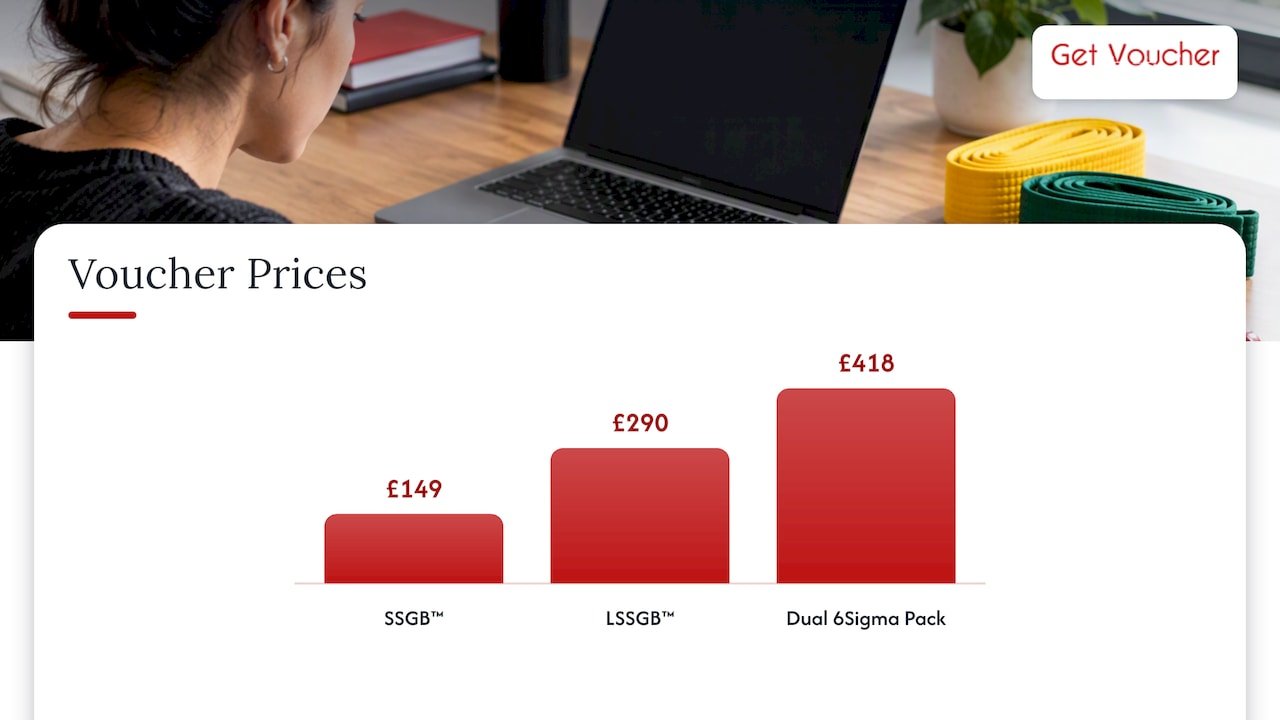
Buying a certification voucher and finding the right study path shouldn’t take longer than studying for the exam itself. We built our Six Sigma offering around that principle: a direct way to secure a voucher for a recognised Green or Yellow Belt pathway and move straight into self-paced preparation, without juggling separate training providers, exam-booking portals and study-material purchases.
Our current Six Sigma vouchers are:
- Six Sigma Green Belt (SSGB™) at £149, suited to career changers who want an exam-only route into the most in-demand belt level without a work-experience prerequisite attached.
- Lean Six Sigma Green Belt (LSSGB™) at £290, suited to professionals who want the Lean-focused variant alongside their Green Belt study.
- Dual 6Sigma Pack, combining the SSGB and LSSGB vouchers, at £418 through our dual pack page, suited to time-poor professionals who’d rather cover both credentials in one purchase than buy separately later.
Each voucher gives you access to structured, self-paced study resources, which cuts down the time spent hunting across separate course providers, PDFs and video platforms. For a fuller view of how the belts and bundles line up, our Six Sigma certification landing page walks through the Green Belt pathway in more detail.
When certification earns its cost
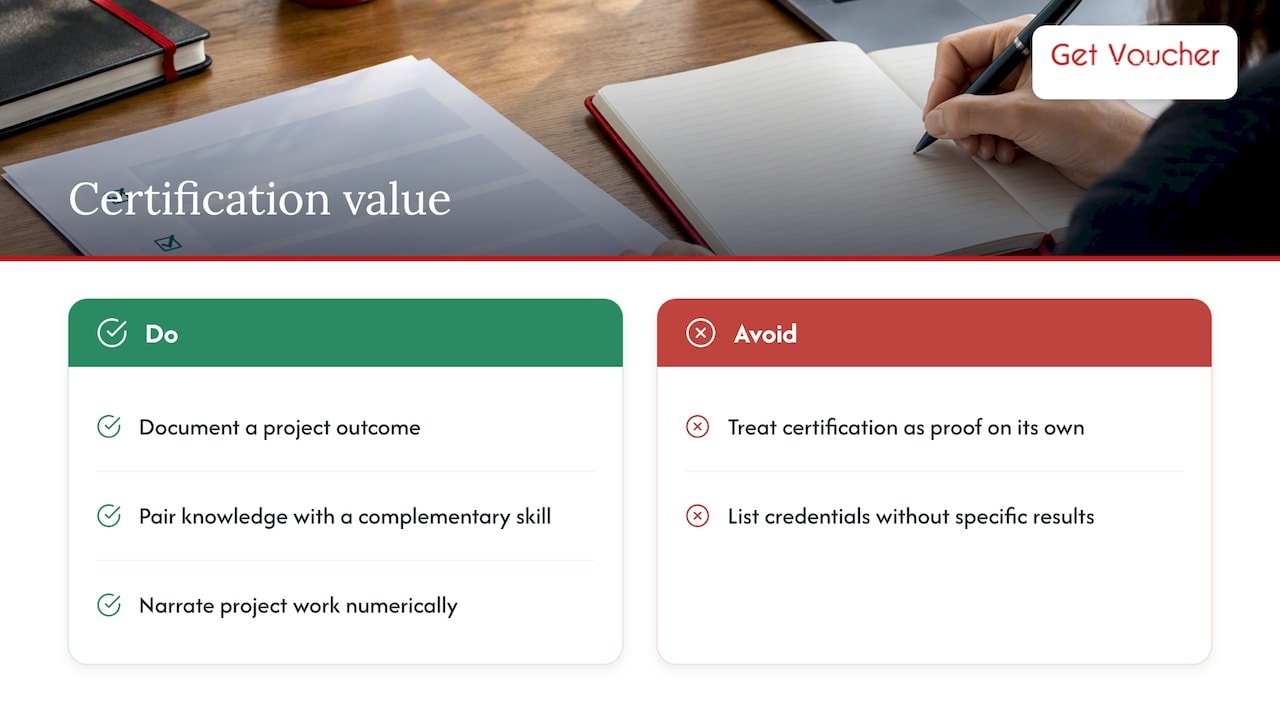
Certification works best as a signal that opens a conversation, not as proof on its own, and pursuing professional credentials through Professional Certifications at ESG Training Institute helps broaden your knowledge and credentials in process improvement and related fields. Its real value climbs sharply once it’s paired with a documented project outcome: a specific defect rate you reduced, a cycle time you cut, a cost you removed from a process. Pairing Six Sigma knowledge with a complementary skill, data analysis, process mapping software, or basic statistical tools, tends to make that signal more credible to a hiring manager than the badge alone.
If you’re deciding where to put your study time, spend some of it learning to narrate your project work numerically. Employers reading a CV or sitting across an interview table consistently respond better to a specific result than to a list of credentials, however well recognised the issuing body.
— Rayan
Get your Six Sigma voucher and start preparing
Once you know which belt fits your background, the process involves selecting a credential, obtaining access, working through study resources at your own pace, then booking the exam when ready. A streamlined process can help focus time on actual exam preparation.

Our current options are:
- Six Sigma Green Belt (SSGB™) at £149 for the exam-only route.
- Lean Six Sigma Green Belt (LSSGB™) at £290 for the Lean-focused variant.
- Dual 6Sigma Pack at £418 for both in one purchase.
Browse the full set of pathways on our Six Sigma certification page and choose the voucher that matches the belt you settled on above.
FAQ
What is the most respected Six Sigma certification?
There’s no single universally “most respected” certification: ASQ credentials carry weight because they require documented work experience or a project affidavit, while IASSC certifications are valued for their exam-only accessibility. Which one matters more depends on whether your employer prioritises proven project experience or verified technical knowledge.
Which Six Sigma certification is the best in the UK?
In the UK, Green Belt is the most sought-after level, making up 44% of new Lean Six Sigma enrolments in 2025 to 2026. Whether you pursue an exam-only Green Belt or one requiring work-experience evidence depends on your employer’s specific expectations rather than a single UK-wide standard.
Is Six Sigma worth it in 2026?
Six Sigma certification remains a recognised signal of process-improvement knowledge, and Green Belt demand has kept growing into 2025 to 2026 according to the UK Lean Six Sigma report. Its value depends heavily on whether you can pair the credential with a documented project outcome rather than treating the certificate as proof on its own.
Which is better, IASSC or ASQ?
Neither is universally better: IASSC offers exam-only certification with no work-experience or project requirement, which suits speed and accessibility, while ASQ requires relevant experience for Green Belt and a project affidavit for Black Belt, which suits candidates who want their applied experience formally validated. The right choice depends on what your target employer expects to see.
How do I prepare effectively for a Six Sigma exam?
Work through your chosen provider’s official syllabus first, since IASSC’s Green Belt syllabus recommends around 80 hours of study for that level as general training guidance rather than a strict requirement. Combine structured self-paced video training with practice questions, and if your route requires a project, start documenting it with numbers early rather than retrofitting results afterwards.
Sources
- PeopleCert IASSC Lean Six Sigma Green Belt
- ASQ Six Sigma Black Belt
- SimplicityHub Lean Six Sigma UK report 2026
- An overview of Six Sigma (NHS/CHD Collaborative)
Six Sigma Certification Path: 60 Questions, Different Belt Rules
[…] Best Six Sigma Certifications: Exam Only or Project Proof? […]
Six Sigma Certification Path: Belts, Order and Rules
[…] these, our ROI diagnostic helps you weigh a certification against your goals, and our guide to best Six Sigma certifications compares exam-only and project-proof […]
Six Sigma Exam Format: Questions, Timing and Rules by Provider
[…] We also think certification should be described honestly. A passed exam shows you have studied a body of knowledge to the provider’s standard. It does not prove real-world performance, and we would not promise an employer reaction, a salary or a promotion. What it can do is give structure to your learning and a recognised way to show you completed it. For a wider view of exam-only versus project-backed routes, see our guide to the best Six Sigma certifications. […]