




An exam voucher is a prepaid, single-use code that pays for a certification exam, or reduces its price, so you don’t pay by card when you book. You buy it once, redeem it with the certification provider, and the code is used up. Everything else depends on the provider: what the voucher covers, how long it lasts, whether training is included and whether you can resit. This guide explains each of those points, so you know what you are buying before you pay.
Table of Contents
- What an exam voucher actually is
- Exam voucher or certification voucher: is there a difference?
- What a voucher usually covers, and what it often doesn’t
- The restrictions to check before you redeem
- How you use a voucher to book an exam
- How much does a certification voucher cost?
- Can you get a free certification voucher?
- What a voucher does not promise
- Our view: buy the voucher last, not first
- Find the voucher that fits your role
- A short checklist before you pay
- FAQ
- Sources
What an exam voucher actually is
Think of a voucher as a gift card for one specific purchase. It carries a unique code. You enter that code at the point of booking or enrolment, and the provider treats the exam fee as paid in full or in part.
Two definitions are worth separating, because the word “voucher” is used loosely online:
- A voucher that covers the fee. You pay for the code, and it replaces the exam payment.
- A voucher that discounts the fee. The code takes a fixed amount or a percentage off the price. Google Cloud’s certification help page describes its vouchers as single-use, individually coded, date-sensitive discounts, set as a flat amount or a percentage.
The Open Group, which runs its own certification programmes, states a similar rule in its voucher terms: each voucher may be redeemed for one certification exam, and vouchers cannot be exchanged for cash.
That last point matters. A voucher is not money you can move around. It is tied to a provider, usually to a specific exam, and often to conditions such as a deadline.
Exam voucher or certification voucher: is there a difference?
In everyday use, the two terms mean the same thing. People searching for a “certification voucher” and an “exam voucher” want the same product: a code that lets them sit the exam for a credential.
The difference shows up in what the code unlocks. Some providers sell a voucher that covers only the exam sitting. Others sell a code that gives access to a course, an exam, or both, under one product name. So when you see “certification voucher”, read the product page to find out whether it is:
- an exam-only code,
- a course or learning-access code, or
- a bundle of the two.
We never assume that two vouchers from different providers include the same things. Even within our own catalogue, inclusions are described product by product, so check the page for the certification you want.
What a voucher usually covers, and what it often doesn’t
A voucher pays for the item it names. Beyond that, treat every extra as a question to ask, not something to assume.
| Item | Often covered? | What to check |
|---|---|---|
| One exam attempt | Yes, that is the core purpose | Whether the voucher is tied to one exam code or version |
| Training or study materials | Depends on the product | The product page, which should list what is included |
| A retake after a fail | Depends on the provider and product | The provider’s retake policy and any extra fee |
| A guaranteed pass | No | No voucher can promise an outcome |
| Renewal or maintenance | Depends on the credential | The provider’s renewal and validity rules |
| Proctoring or scheduling support | Depends on the exam format | Whether the exam is proctored at all |
On retakes, the terms are where people lose money and time. We have a separate guide on checking voucher terms before a certification retake, which is worth reading before you commit to any provider.
The restrictions to check before you redeem
Vouchers are conditional. Google Cloud’s help page notes that vouchers can be limited to certain email domains or geographic regions, and can also target specific exam languages, professional levels or user groups. Other providers set their own conditions. Before you pay, run through this list:
- Expiry date. Does the code lapse, and does it lapse from purchase or from first use?
- Exam scope. Is it valid for one named exam, a series, or a particular version of an exam?
- Region and currency. Some codes only work in certain countries.
- Transferability. Can you give it to a colleague if your plans change?
- Refunds. Are unused vouchers refundable, or are they final?
- Who can use it. Some codes are restricted to certain groups or email addresses.
Ten minutes spent on this list costs nothing. A voucher that expires before you finish studying is money wasted.
How you use a voucher to book an exam
The exact steps differ by provider, so follow the instructions that arrive with your code. The general pattern is consistent:
- Buy the voucher from the provider or an authorised seller, and keep the confirmation email.
- Create an account with the certification body, if you haven’t already.
- Enter the code at registration or checkout. The price should drop to nil, or by the stated amount.
- Choose how you take the exam. Some exams are sat at a test centre, some online with a person or software watching you, and some online with no monitoring.
- Sit the exam within the voucher’s validity period.
The exam format is a separate question from the voucher. If you are unsure what a monitored online sitting involves, read our guide to online proctored exams. If the exam is unmonitored, our piece on how professionals verify unproctored certifications explains what that means for you. Neither format is inherently more credible than the other. Each provider designs its own.
How much does a certification voucher cost?
There is no single price, because the voucher takes its price from the exam it pays for. Several things move the figure:
- The provider. Each certification body sets its own fees.
- The level. Introductory credentials tend to cost less than advanced ones, though this is provider-specific.
- What is bundled. A code that includes learning access will not cost the same as an exam-only code.
- Currency and region. Prices can differ by country.
- Retakes and renewal. These can be extra, so the first price isn’t always the full cost.
To give you a real range, these are the prices published in our catalogue, as read from our site on 14 October 2026. Each is a one-off price.
| Certification | Price |
|---|---|
| Scrum Fundamentals Certified | £0 |
| Six Sigma Yellow Belt (SSYB™) | £0 |
| Scrum Developer Certified (SDC®) | £99 |
| Risk Management | £99 |
| Six Sigma Green Belt (SSGB™) | £149 |
| SMstudy® Certified Digital Marketing Professional | £199 |
| NGstudy™ Certified Negotiation Professional (NCN-P) | £199 |
| Scrum for Operations and DevOps Expert Certified | £239 |
| Scrum Master Certified (SMC®) | £249 |
| Lean Six Sigma Green Belt (LSSGB™) | £290 |
| Scrum Product Owner Certified (SPOC®) | £299 |
| SCRUM Agile Master Certified (SAMC™) | £349 |
| Dual 6Sigma Pack (SSGB and LSSGB) | £418 |
| Dual Agile Pack (Scrum Master and Product Owner) | £519 |
The SMstudy marketing certifications beyond Digital Marketing Professional, including Email, Search, Affiliate, Marketing Research and Marketing Strategy, are also listed at £199 each. For the full catalogue, see our certifications page. If Six Sigma is your area, our breakdown of Six Sigma exam cost and the extras to watch for goes line by line.
A lower price is not automatically the better deal. An exam-only voucher is cheaper only if you don’t need anything else, and it is not universally the cheapest route to a credential.
Can you get a free certification voucher?
Sometimes, yes, and the usual route is an introductory credential. Two of ours are priced at £0: Scrum Fundamentals Certified and Six Sigma Yellow Belt. Free entry-level credentials give you a low-risk way to test whether a field suits you before you pay for a professional-level exam.
Be cautious with “free voucher” offers elsewhere. Many are time-limited promotions, and others carry eligibility rules, such as a student status, an employer scheme or a regional restriction. Look for the conditions on the provider’s own page, and treat any site asking for payment details to “unlock” a free code with suspicion.
What a voucher does not promise
A voucher pays for access to an exam. It doesn’t promise a pass, a job, a salary or a promotion, and it does not prove that you can do the work. A certification shows that you met a provider’s assessment standard, and what an employer makes of it varies by role and company.
Two practical consequences follow:
- Prepare as if the fee were yours. A voucher removes a payment, not the need to study.
- Know the exam format first. Questions, time limit and delivery method differ by provider. For example, the SCRUMstudy Scrum Fundamentals Certified exam is 40 questions in 60 minutes, online and unproctored. The SCRUMstudy Scrum Master Certified (SMC®) exam is 100 questions in 120 minutes, also online and unproctored. These figures are specific to those credentials, and shouldn’t be assumed for any other provider.
Our view: buy the voucher last, not first
We run a voucher platform, so you might expect us to say “buy now”. Our advice is the opposite order. Decide the credential first, then check the terms, then buy.
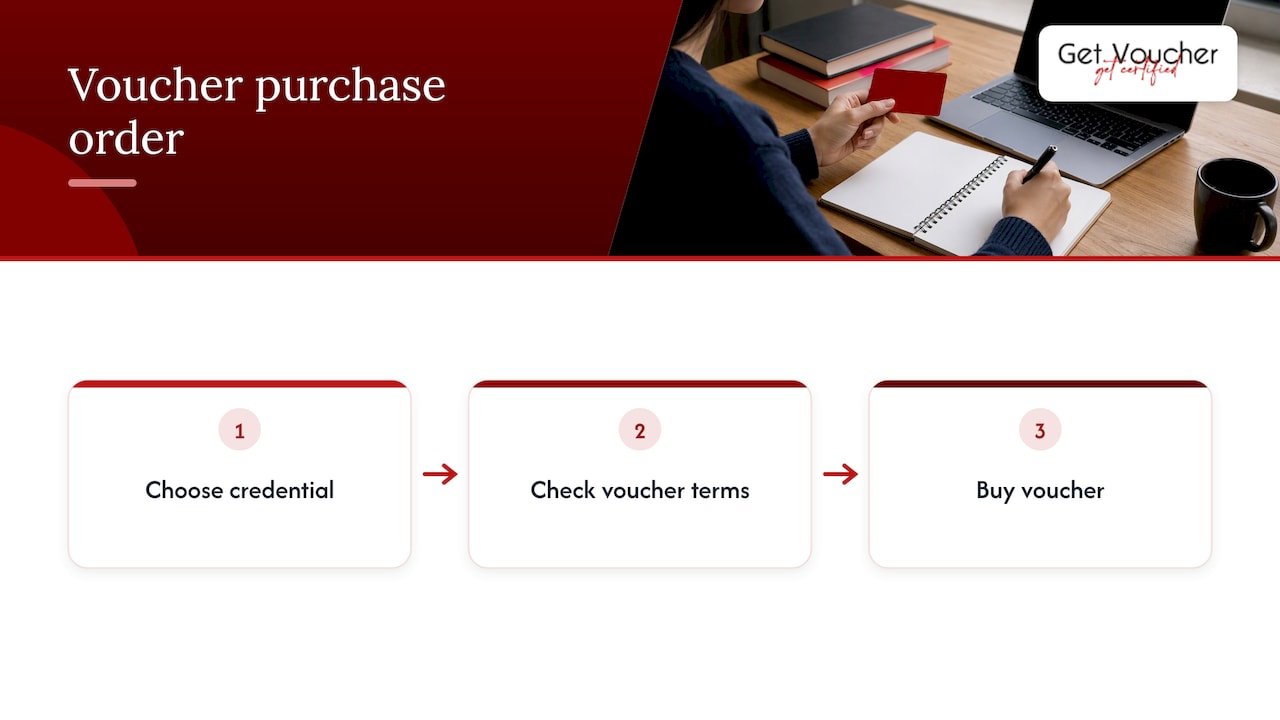
In our experience of how people choose, the mistakes are predictable. Learners buy the cheapest code they find and discover it doesn’t match the exam version they need. Others buy an advanced credential before checking the prerequisites. Some assume a voucher includes training, only to find it covers the exam alone.
This is why we organise our catalogue around pathways rather than price. You can start with a free introductory credential, such as Scrum Fundamentals or the Six Sigma Yellow Belt, then move up when you are ready. Our Scrum certification guide helps you match a Scrum credential to your role. We keep Scrum-specific concepts separate from Agile in general, and we keep each provider’s rules separate from the next one’s.
We also don’t sell every credential you will see mentioned. Certifications from other bodies, such as Scrum.org, Scrum Alliance, ASQ or PMI, are separate offerings with their own exams, prices and rules, and you should check those with the bodies that run them.
— Rayan
Find the voucher that fits your role
If you already know your direction, you can go straight to a product. We sell vouchers for professional certifications in Scrum and Agile, digital marketing, quality management and Six Sigma, negotiation and sales, with the inclusions described on each product page.
Some starting points:
- Scrum Master: SMC® at £249, or the Dual Agile Pack at £519 if you want Scrum Master and Product Owner together.
- Quality management: Six Sigma Green Belt at £149, or the Dual 6Sigma Pack at £418.
- Marketing: SMstudy® Certified Digital Marketing Professional at £199.
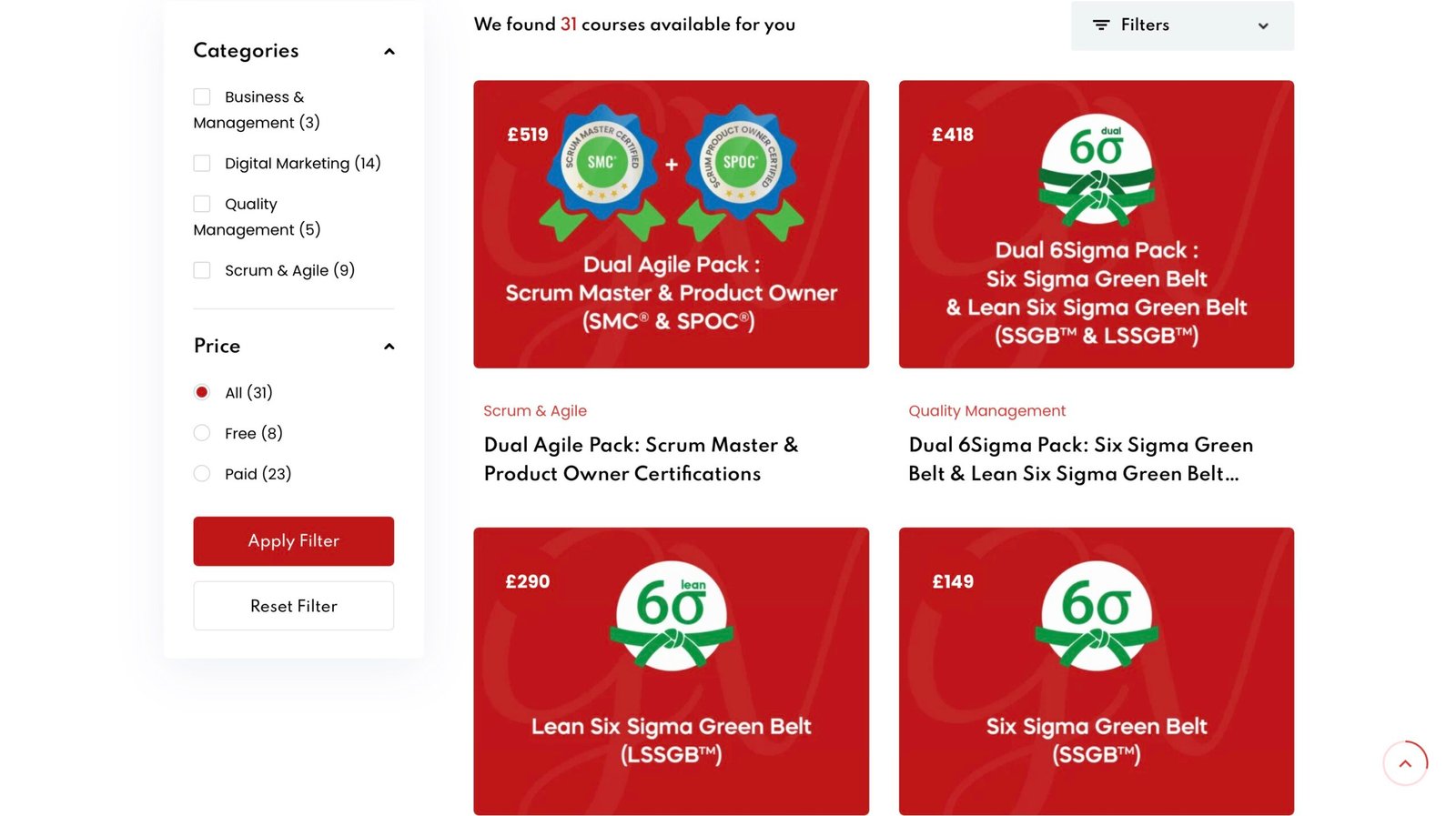
Browse the full range on GetVoucher, or start with the free Scrum Fundamentals Certified voucher if you are new to the field.
A short checklist before you pay
- Name the exact credential and exam version you want.
- Read the prerequisites for that credential.
- Confirm what the voucher includes: exam, training, materials, or all three.
- Check the expiry date and whether the code can be refunded or transferred.
- Find the retake policy and any retake fee.
- Check the exam format and delivery method.
- Note any renewal or maintenance rules, which are credential-specific.
FAQ
Is a voucher code the same as an exam voucher?
Not exactly. A voucher code is any code that gives a discount or credit. An exam voucher is a code specifically tied to a certification exam. The wording on the product page tells you which one you are getting.
Does an exam voucher include a retake?
Only if the provider or product says so. Retake rules are set provider by provider, and some charge a fee for another attempt. Read the retake terms before you buy, not after a fail.
Can I use a voucher for any exam from the same provider?
Usually not. Vouchers are often limited to a named exam, and some are limited by version, language or region. Google Cloud’s help page notes that its vouchers can target specific exam languages, levels or user groups.
Does a voucher guarantee that I’ll pass?
No. It pays for the exam sitting. Passing depends on your preparation and the provider’s standard.
Sources
- Vouchers & Discounts, Cloud Certification Help (Google Cloud)
- Terms and Conditions for Voucher Codes (The Open Group)