




Unproctored certification exams are time-bound assessments taken without live supervision, and when well-designed they broaden access while preserving credibility through assessment design and technical controls. Design choices such as item-bank rotation, time limits and analytics, not supervision method alone, determine how much confidence an employer can place in the result. Some certification pathways associated with VMEdu have moved towards unproctored delivery, and this article explains what that shift means in practice.
Table of Contents
- What is an unproctored exam, and how does it differ from proctored and open-book formats
- Why candidates and providers choose flexibility, accessibility and convenience
- How design and technical controls protect exam integrity without a proctor
- Who unproctored exams suit, and when a proctored exam remains preferable
- GetVoucher, VMEdu and SCRUMstudy: an example of format evolution
- What generative AI and sector guidance suggest about assessment’s future
- Technological challenges and limitations of unproctored certifications
- Privacy and data protection considerations in unproctored testing
- How employer and institutional recognition varies by credential, not by proctoring method
- How to prepare for an unproctored certification exam
- What candidates should check before choosing a format
- Where GetVoucher fits if you are ready to book a voucher
- Sources
- FAQ
What is an unproctored exam, and how does it differ from proctored and open-book formats
The terms get muddled, so it helps to separate three distinct questions: who is watching, where the exam happens, and what materials you are allowed to use.
Unproctored means no live human or recorded monitoring during the test. Remote proctored covers two variants: live, where an invigilator watches over video, and record-and-review, where the session is filmed and checked afterwards. Open-book refers purely to whether you can consult notes, manuals or the internet while answering, and it is a separate axis entirely. An exam can be proctored and open-book, or unproctored and closed-book; the two do not automatically pair.
Common delivery modes you will encounter include:
- Computer-based tests taken at a testing centre under staff supervision.
- Timed, unmonitored online tests with no human or recorded oversight.
- Recorded sessions reviewed afterwards by assessors or automated systems.
Because terminology varies between providers, always check the issuing body’s own exam policy before you enrol rather than assuming a format based on the certification type.
Why candidates and providers choose flexibility, accessibility and convenience
Unproctored delivery removes a scheduling bottleneck. A candidate in one time zone no longer has to find a testing slot that matches a proctor’s availability on the other side of the world, which particularly helps shift workers, parents and people studying around a full-time job.
Accessibility also improves in practical ways. Candidates using assistive technology, such as screen readers or speech-to-text tools, often find unproctored formats easier to configure on their own equipment, and removing travel to a physical test centre cuts a real barrier for people with mobility constraints or limited transport access.
For providers, unproctored exams reduce the fixed costs of booking invigilators and testing-centre capacity, which can translate into more flexible retake policies and broader geographic reach.
- Sit the exam from home, a library or a co-working space rather than a fixed test centre.
- Schedule around work and caring commitments instead of a proctor’s calendar.
- Reach candidates in regions with limited access to physical testing centres.
Guidance from Ofqual on remote invigilation notes that its suitability varies by context, and that technical constraints such as internet quality and device setup shape whether any supervised format is practical for a given candidate.
How design and technical controls protect exam integrity without a proctor
Removing live supervision does not mean removing safeguards. It shifts where the safeguards sit, from a person watching a webcam to decisions made before the candidate ever opens the exam.
Design-led measures do much of the heavy lifting:
- Authentic, applied tasks that are harder to answer from memorised material alone.
- Project-based or portfolio assessment that spans more than a single sitting.
- Oral or verbal follow-up checks for a sample of candidates.
- Staged assessment, where later modules build on verified earlier work.
Technical measures reinforce these choices: large rotating item banks so candidates rarely see identical questions, strict time limits that constrain lookup-based answering, secure browser lockdowns, text-similarity checks on written responses, and session analytics that flag unusual patterns for post-hoc review.
Ofqual’s analysis of remote invigilation found that it can increase integrity compared with no invigilation at all, but stressed that suitability must be judged case by case rather than assumed. Separately, government guidance on accessible assessment design instructs awarding bodies to avoid features that disadvantage some learners while still measuring the intended skill or knowledge.
Effective assessment integrity depends on assessment design, not supervision method alone.
That principle, drawn from regulatory thinking on vocational and technical qualifications, is the clearest single lens for judging any unproctored credential on its own merits.
Who unproctored exams suit, and when a proctored exam remains preferable
Unproctored formats tend to fit introductory certifications, micro-credentials and continuing-professional-development modules, where the goal is demonstrating understanding of a defined body of knowledge rather than gatekeeping entry to a regulated profession.
They suit several groups particularly well:
- Working professionals fitting study and assessment around existing jobs.
- Candidates in regions without convenient access to a physical testing centre.
- Learners progressing through a structured series of modules at their own pace.
Proctored exams remain the better fit in other situations: statutory or licensed roles where regulation requires supervised assessment, exams covering highly confidential content that cannot risk wider disclosure, and contexts where personation, someone else sitting the exam, is a material risk the issuing body has flagged.
Pro Tip: Before enrolling, read the issuing body’s own exam-policy page rather than relying on a course description, since formats and rules can change between cohorts.
GetVoucher, VMEdu and SCRUMstudy: an example of format evolution
Some voucher platforms sell access to certification pathways offered by established providers, including VMEdu and certification brands such as SCRUMstudy, SMstudy and 6sigmastudy, each of which sets its own exam rules, difficulty level and recognition status.
VMEdu’s move towards unproctored delivery for some SCRUMstudy exams is one example of how exam-delivery approaches evolve over time; it does not mean every VMEdu-affiliated credential uses the same format, or that format changes are permanent. Exam formats and policies vary by certification and can change, so verification before purchase matters more than assumption.
Before buying a voucher, check how online training and certification delivery works to understand the format fully:
- The exact exam format listed on the certification’s official provider page.
- Whether the exam is open-book, closed-book, timed or untimed.
- Current retake and identification rules, since these can differ by credential.
GetVoucher’s certifications page and its guidance on maintaining a SCRUMstudy certification are useful starting points for that check.
What generative AI and sector guidance suggest about assessment’s future
Academic and regulatory bodies are rethinking assessment design partly in response to generative AI. QAA guidance on generative artificial intelligence recommends ‘sustainable assessment’, redesigning tasks so they stay valid and accessible even when AI tools are widely available, rather than leaning solely on supervision to deter misuse.
Procurement activity reflects the same direction of travel. A Find-Tender notice for digital assessment tools outlines buyer interest in integrated platforms that combine secure delivery, analytics and integrity tooling, rather than standalone proctoring as a single fix.
Practical consequences for employers and candidates include:
- Expect assessment design, not proctoring alone, to carry more of the integrity burden over time.
- Transparency about exam format will matter more as policies evolve.
- Verification before enrolment becomes a habit worth keeping, not a one-off check.
Technological challenges and limitations of unproctored certifications
Unproctored delivery depends on technology working correctly, and that dependency creates its own failure points. Automated anomaly detection, where used, flags unusual patterns such as atypical timing or repeated answer sequences, but flagging is not the same as certainty; false positives and false negatives both occur, and providers vary in how they handle borderline cases.
Technical failures are a separate concern. An unstable internet connection, a browser crash or a device that does not meet minimum requirements can interrupt a timed session, and how a provider handles that interruption, whether through a pause, a restart or a formal appeal process, depends entirely on that provider’s own policy. Ofqual’s review of remote invigilation specifically flagged device setup and connectivity as practical constraints that affect any remote assessment format, proctored or not.
There is also a equity dimension. Candidates with slower connections, older devices or less reliable power supply face a structurally different exam experience to those with better infrastructure, even when the exam content is identical. None of this means unproctored exams are inherently less secure than proctored ones; it means the risk profile shifts from supervision failure to technical and infrastructure failure, and candidates benefit from understanding which risks apply before sitting down to start the clock.
Privacy and data protection considerations in unproctored testing
Even without a live camera watching you, unproctored exams still collect data: login timestamps, answer patterns, IP addresses and sometimes device information used for anomaly detection. Candidates are entitled to know what is collected and why, and reputable providers state this in a privacy policy rather than leaving it implicit.
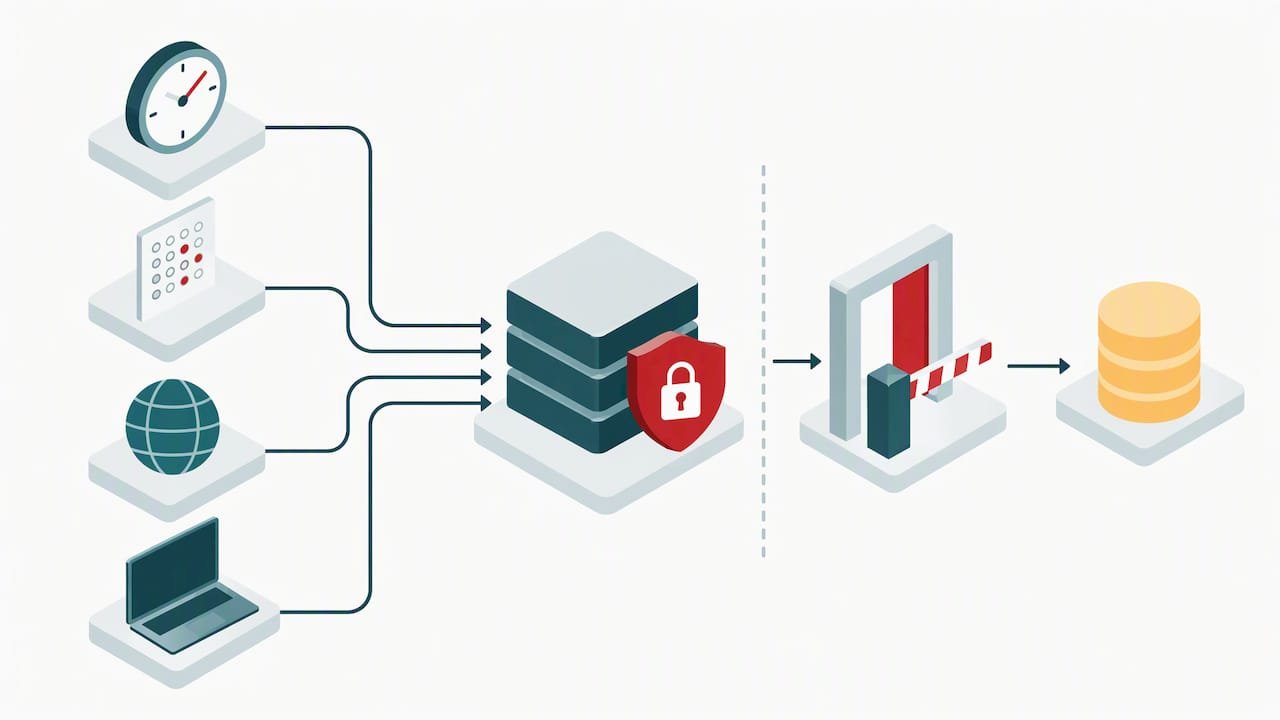
Data retention is a practical question worth asking directly. How long does the provider keep session data, who can access it, and is it shared with third parties for analytics or fraud detection? These answers vary by provider and are rarely identical across certification bodies, so a blanket assumption about privacy practice across all unproctored exams would be misleading.
Account security sits alongside data privacy. Because unproctored exams rely on the candidate’s own login credentials, protecting that account, through a strong password and avoiding shared logins, matters more than it might for a proctored exam where an invigilator checks photo identification in person. Candidates preparing for any unproctored certification should read the specific provider’s privacy and data policy rather than relying on general assumptions about how online testing works.
How employer and institutional recognition varies by credential, not by proctoring method
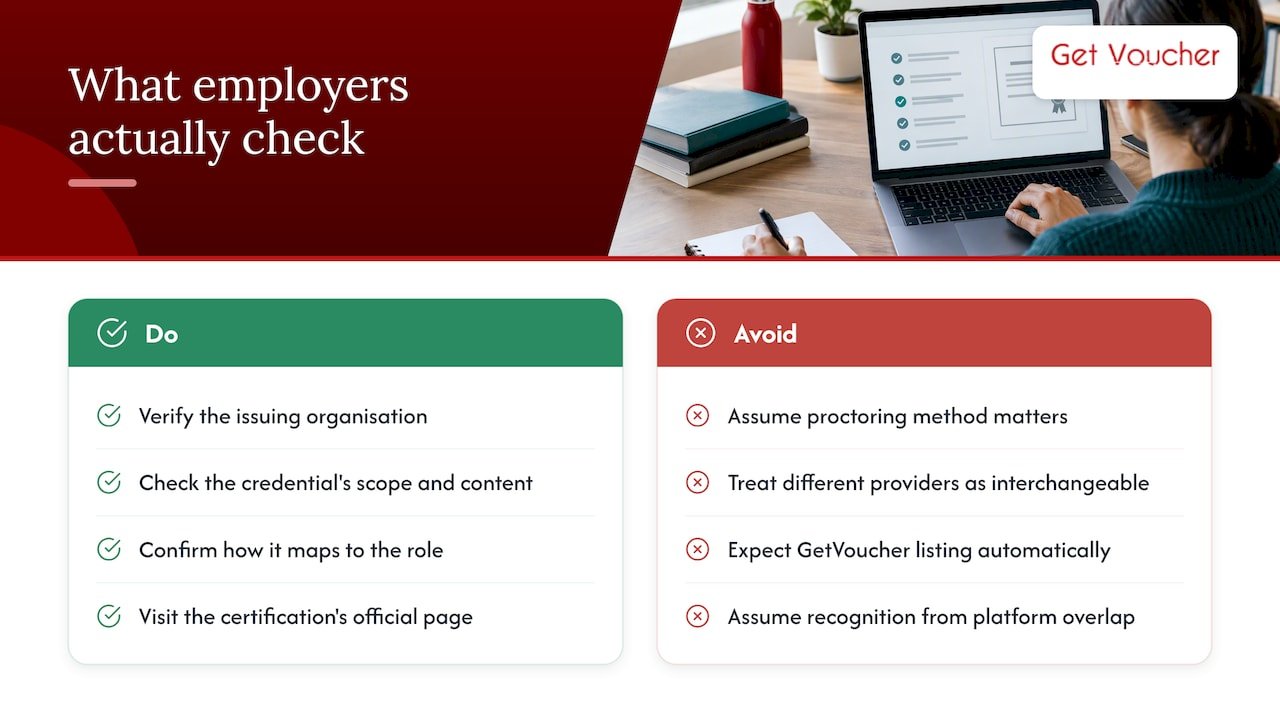
Recognition of a certification depends on the issuing body, the credential’s scope and how established it is within its field, not on whether the exam happened to be supervised. A credential from a recognised body delivered without a live proctor is not automatically viewed differently by employers than one delivered under supervision; what employers generally weigh is the credential’s content, the issuing organisation’s standing and how directly it maps to the role in question.
This is precisely why generalising across certifications is misleading. SCRUMstudy, SMstudy and 6sigmastudy are each run by their own issuing body, with their own exam rules, difficulty levels and recognition profiles; treating them as interchangeable because they may share a delivery platform ignores real differences between them. A reader comparing options should check each credential’s own official page rather than assume shared characteristics based on provider overlap.
Where a specific certification is not yet listed on GetVoucher, it is worth noting that the platform is expanding its catalogue, and readers interested in a credential not currently available are encouraged to contact GetVoucher directly for current pricing and availability rather than assume it will appear automatically.
How to prepare for an unproctored certification exam
Preparation for an unproctored exam follows the same core discipline as any other credential: understand the syllabus, practise under realistic time pressure, and confirm the rules before test day.
Start with the official exam blueprint published by the issuing body, since this defines what is actually tested and in what proportions. Timed practice matters particularly for unproctored exams, since many use strict time limits as a design-led integrity measure rather than relying on supervision; practising against the clock reduces the chance of running out of time on the real attempt.
Confirm your technical setup in advance: a stable internet connection, a compatible browser or testing application, and a quiet space free of interruptions. Where the exam uses a lockdown browser or requires a webcam check even without live monitoring, test this equipment beforehand rather than on the day itself.
Finally, read the specific retake and identification policy for your certification. These rules differ by issuing body, and assuming one provider’s policy applies to another is a common and avoidable mistake. A short checklist, syllabus, timing, technical setup, retake rules, covers most of what separates a confident attempt from an unnecessarily stressful one.
What candidates should check before choosing a format
Choosing between a proctored and an unproctored exam comes down to what the issuing body actually requires, not a general preference for one format over another. I would always start with the certification’s own official exam page, since that is the only reliable source for current rules, difficulty expectations and recognition status. If anything is unclear, contact GetVoucher or the issuing body directly before paying for a voucher.
— Rayan
Where GetVoucher fits if you are ready to book a voucher
Certain voucher platforms operate alongside providers such as VMEdu and certification bodies including SCRUMstudy, SMstudy and 6sigmastudy, aiming to streamline the process of finding and buying certification vouchers in one place rather than across multiple sites.
This can benefit working professionals juggling study time with a job, when course access, study resources and the voucher are bundled together, eliminating the need to hunt for materials separately after deciding on a certification.
- Browse the full certifications catalogue to compare pathways across Agile, quality management and marketing.
- Check the Dual Agile Pack if you want combined Scrum Master and Product Owner preparation.
- Confirm current exam format and rules on the issuing body’s page before you buy.
Visit GetVoucher to see current vouchers and course bundles, and get in touch if you need help confirming which certification and exam format fits your situation.
Sources
- Remote invigilation within vocational and technical qualifications
- QAA advice and resources on generative artificial intelligence
FAQ
Which certifications never expire?
Expiry and renewal rules are set entirely by the issuing body, so there is no universal answer across certifications. Always check the specific credential’s official policy, since some require periodic renewal or continuing-education points while others do not state an expiry at all.
What is a proctored and unproctored exam?
A proctored exam involves live or recorded supervision, either in person or remotely, while an unproctored exam has no supervision during the session. Both can be timed, closed-book or open-book independently of whether supervision is present.
What is a non-proctored assessment?
A non-proctored assessment, often called unproctored, is a test taken without a live or recorded invigilator watching the session. Integrity in this format relies on assessment design and technical controls such as time limits and item-bank rotation rather than human supervision.
Do cyber security certifications expire?
Expiry policies vary by certifying body and specific credential, so this depends entirely on which cyber security certification is in question. Candidates should check the issuing organisation’s own renewal requirements rather than assume a standard rule applies across the field.