



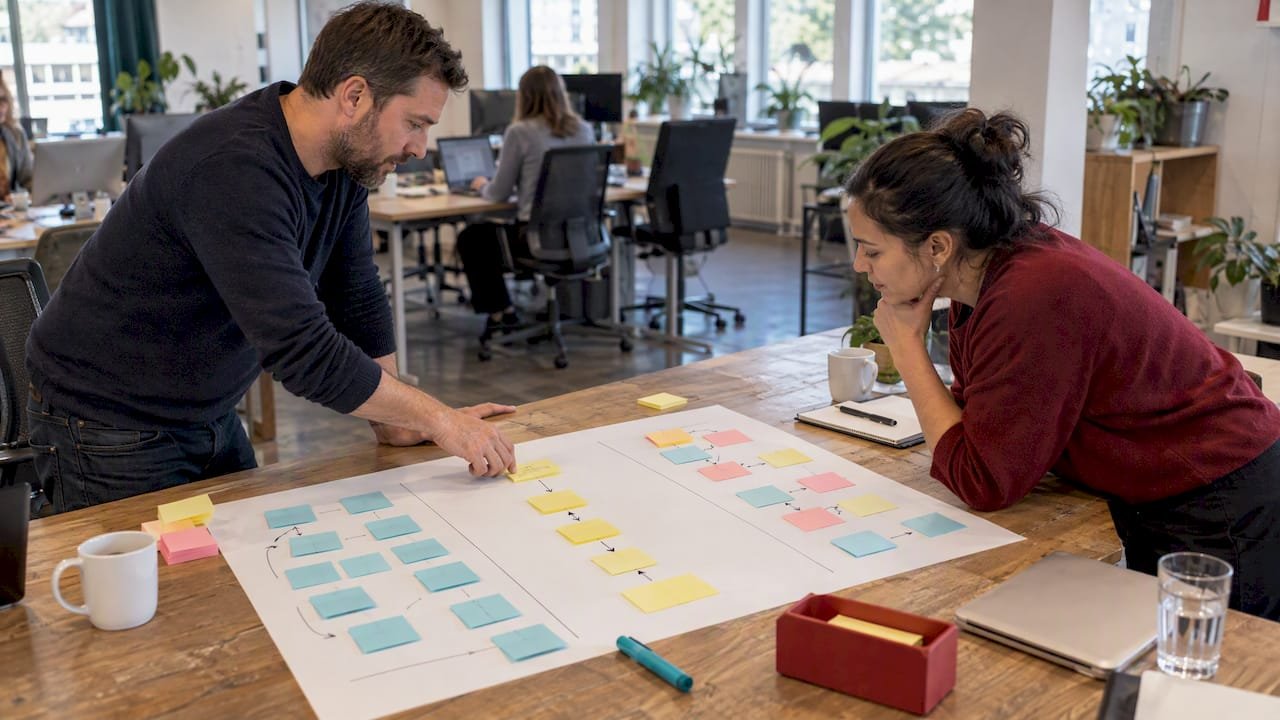
A Scrum Master facilitates a team’s use of Scrum and supports the team’s effectiveness, while a project manager typically owns scope, schedule, budget and governance across a project. If you want to coach teams and improve delivery flow, Scrum-focused certification such as Scrum Master Certified (SMC®) is an appropriate route. If you want to manage cross-functional constraints and stakeholder reporting, broader project management training fits better.
Table of Contents
- Side-by-side responsibilities and accountabilities
- Authority, decision rights and stakeholder management
- Planning and delivery approaches: Scrum, Waterfall and hybrid governance
- Skills, behaviours and day-to-day activities
- Certifications and training paths
- When both roles exist: hybrid models and practical collaboration
- How to choose which role or path is right for you
- Author perspective and practical next steps
- Recommended GetVoucher courses and where to start
- FAQ
- Sources
Side-by-side responsibilities and accountabilities
The clearest way to separate these roles is to look at what each one is actually accountable for on a working day. The 2020 Scrum Guide frames the Scrum Master as accountable for facilitating the Scrum framework and for the Scrum Team’s effectiveness, not for directing the work itself. A project manager, by contrast, typically carries responsibility across a wider set of constraints: scope, schedule, finance, risk, quality and resources, according to APM’s analysis of agile project management.
In practice, the two sets of duties look like this:
- A Scrum Master facilitates Scrum events, coaches the team towards self-management, and causes impediments to be removed rather than removing them unilaterally.
- A Scrum Master shares accountability for continuous improvement and team effectiveness, working alongside the team rather than directing it.
- A project manager often plans and tracks scope, schedule and budget, depending on the organisation’s governance model and delivery method.
- A project manager typically manages risk registers, quality assurance and resource allocation across one or several workstreams.
Where the two roles meet is in delivery outcomes: both are judged on whether the work gets done well, just from different angles. Many organisations negotiate the overlap explicitly, agreeing who owns budget conversations and who owns team facilitation, rather than leaving it to assumption.
Authority, decision rights and stakeholder management
Decision rights differ sharply between the two roles. The Scrum Master’s authority, as described in the Scrum Guide, sits inside the team: coaching choices, meeting facilitation and protecting the team’s focus. A project manager’s authority, per APM’s project manager role profile, typically extends to governance decisions, budget tolerances and formal stakeholder reporting.
- Scope changes and budget approvals often escalate to the project manager or a governance board, depending on delegated authority.
- Team-level blockers are typically addressed by the Scrum Master, who causes them to be removed through coaching or escalation to the right person.
- Stakeholders usually receive formal status reporting from the project manager, while the Scrum Master engages stakeholders more informally, protecting the team’s working rhythm.
Clarity on these boundaries at project kick-off avoids the confusion that otherwise builds up quietly over a few sprints.
Planning and delivery approaches: Scrum, Waterfall and hybrid governance
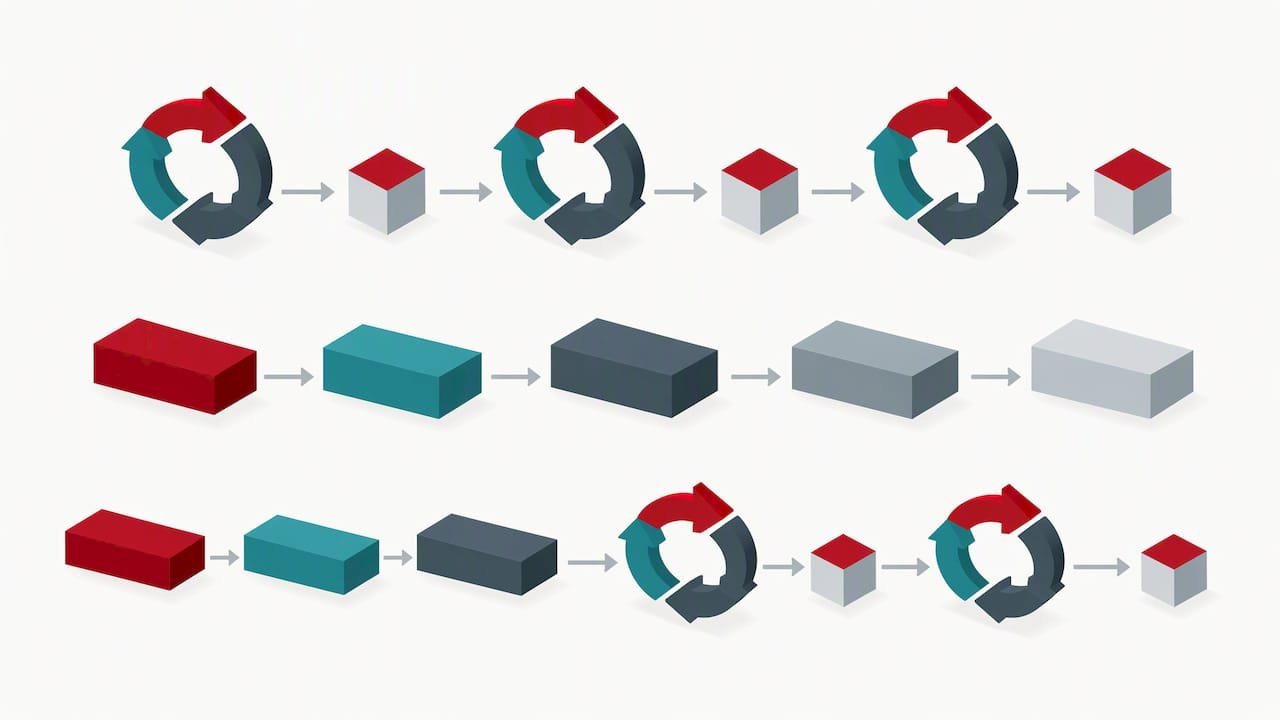
Scrum organises work into short, timeboxed sprints with planning, review and retrospective built into each cycle, which suits work where requirements are likely to change. Predictive, stage-gate planning, often associated with Waterfall or PRINCE2-style governance, suits work where scope and sequencing can be defined upfront and cost control depends on fixed milestones.
Neither approach is universally correct. The choice depends on the project’s uncertainty and its governance needs:
- Use Scrum or another Agile framework when requirements are expected to evolve and fast feedback matters more than fixed scope.
- Use predictive or stage-gate planning when regulatory, financial or contractual constraints demand firm milestones agreed in advance.
- Combine governance frameworks with Agile delivery when an organisation needs investment control alongside iterative teamwork, a pattern PRINCE2 commentary describes as a deliberate choice rather than a compromise.
Many organisations run both models at once: a governance layer tracking investment and risk, with Agile teams delivering underneath it.
Skills, behaviours and day-to-day activities
The two roles ask for genuinely different strengths, which is why career changers often need to be honest with themselves about which they enjoy more.
- A Scrum Master needs facilitation skill, coaching patience, conflict resolution and the situational awareness to spot team dysfunction early, as outlined in How to Enhance Team Collaboration: A Manager’s Guide.
- A project manager needs planning discipline, budgeting competence, stakeholder diplomacy and comfort with formal governance reporting.
- A Scrum Master’s week typically includes daily stand-ups, sprint planning, sprint review and retrospective facilitation.
- A project manager’s week often includes status reporting, budget tracking, risk reviews and stakeholder meetings, depending on the organisation’s delivery method.
Pro Tip: If you are unsure which role suits you, track your own working week for a fortnight and note whether you gravitate towards coaching conversations or towards spreadsheets and status reports.
Certifications and training paths
Certification choice should follow the career direction you actually want, not the other way round. For professionals moving towards Agile delivery and team facilitation, Scrum Master Certified (SMC®) from GetVoucher, delivered through VMEdu and certified by SCRUMstudy, is the primary Scrum-focused credential worth considering.
- Scrum Fundamentals Certified offers a lower-commitment entry point for readers new to Scrum concepts before committing to full SMC® certification.
- Broader project management certifications such as PMP or PRINCE2 suit professionals managing scope, budgets, timelines and cross-functional delivery rather than team facilitation alone.
- Combining a Scrum credential with a broader PM qualification is a common route for professionals aiming at hybrid delivery roles.
- Always verify current pricing and availability on the provider’s page before purchase, since course details can change.
Readers comparing Agile roles more broadly may also find our piece on Scrum Master versus Product Owner useful for mapping out adjacent career paths.
When both roles exist: hybrid models and practical collaboration
Many organisations run a project manager and a Scrum Master side by side rather than forcing a choice between them. APM guidance describes this as a common split: the project manager governs investment, risk and overall stakeholder expectations, while the Scrum Master facilitates the team’s delivery rhythm.
- Handoffs work best when sprint outcomes feed directly into the project manager’s governance reporting, rather than being reconstructed afterwards.
- Shared ceremonies, such as a joint review of sprint outcomes against budget milestones, keep both roles aligned without duplicating effort.
- The most common pitfall is role confusion, where both people try to manage the same decision; documenting decision rights at the outset avoids this.
How to choose which role or path is right for you
Choosing between these paths comes down to matching your own working style to the role’s daily reality.
- List the parts of past projects you enjoyed most: coaching a team through a tough sprint, or negotiating a budget with a stakeholder.
- Ask a prospective employer directly who owns scope changes and who facilitates team impediments, since job titles alone rarely clarify this.
- Treat vague answers about decision rights as a red flag; unclear authority usually means unclear accountability later.
Pro Tip: During an interview, ask who signs off budget variances and who runs the retrospective; the answers tell you more about the role than the job description does.
Author perspective and practical next steps
Scrum Master and project manager are not rival career tracks competing for the same ambition, they serve different instincts. If coaching a team through friction energises you more than tracking a budget variance, start with Scrum Fundamentals. If governance and cross-functional planning appeal more, map your current tasks against a project manager’s role profile instead.
— Rayan
Recommended GetVoucher courses and where to start
The platform connects learners to certification pathways from established providers, including VMEdu and certification bodies such as SCRUMstudy, enabling progression from entry-level courses towards fuller credentials.

- Scrum Master Certified (SMC®) is the main Scrum Master credential on GetVoucher, priced at £249 one-off; confirm current pricing and availability on the course page before purchase.
- Scrum Fundamentals Certified offers a free introductory route for readers who want to test their interest in Scrum before committing further.
- Browse the full certifications catalogue to compare Scrum, Agile and broader professional pathways in one place.
View the SMC® or Scrum Fundamentals course pages for full details, then decide which starting point matches your current experience.
FAQ
What pays more, Scrum Master or project manager?
Pay depends heavily on industry, location, seniority and the specific organisation, and no single figure applies across the board. Rather than comparing salaries directly, focus on which responsibilities, scope of authority and daily work suit your skills and preferences.
Which is better, a project manager or a Scrum Master?
Neither role is objectively better, they suit different strengths. A Scrum Master fits those who prefer coaching and team facilitation, while a project manager fits those who prefer managing scope, budget and governance.
Is Scrum still relevant in 2026?
Scrum remains a widely used Agile framework for teams working with evolving requirements, and the Scrum Guide continues to define its roles and events. Its relevance depends on whether a project’s uncertainty and team structure suit an iterative approach rather than predictive planning.
Can a Scrum Master become a project manager?
Yes, moving from Scrum Master to project manager is a recognised transition, though it typically requires a shift from facilitation towards governance, budgeting and formal stakeholder reporting. Practitioner research notes this move is behavioural as much as technical, since coaching skills do not automatically transfer to governance responsibilities.
SAFe vs Scrum for Leaders: Team Size Won’t Settle the Choice
[…] Which Fits You: Scrum Master or Project Manager, and What Cert to Take […]